Tag Archives: Toastmasters

The best kept secret to acquiring superb public speaking skills

On this day, a hundred years ago, the first ever Toastmasters meeting took place in California. 

Fast forward a hundred years, here I am, giving a keynote speech and an event in Estonia last weekend. đŸ˜ƒđŸ˜ƒđŸ˜ƒ

Thanks to Toastmasters, I have become a better speaker, trainer and coach. Here’s to the next one hundred years! đŸŽŠđŸŽ‰đŸŽ‚

If you want to become a more confident speaker, check out your closest Toastmasters club.

How can you benefit personally by helping others manage difficult conversations?

There are conflicts between people in all organizations. Toastmasters, an organization dedicated to helping people excel at public speaking, is a rare exception in having had the wisdom to of set up a conflict resolution function within its organization. 

What do I mean by a conflict? 

Conflicts are usually the quite mundane issues and arguments between people at a business, at a hobby or at home. 

Most often it’s about someone having insulted another person, either on purpose or unknowingly. 

Then, over the weeks, months and surprisingly often even years, the issue grows. People avoid talking to each other and instead talk negatively about others behind their back. 

A huge amount of people’s energy is wasted in a negative spiral, instead of productive work. 

Stress levels rise.

All this prevents organizations from achieving their full potential. It makes it harder for people and organizations to reach both their short- and long-term goals, whether they are about sales, profit or qualitative goals.

For the past twelve months, I’ve had the privilege of running a conflict resolution team at Toastmasters. While the organization is global, my district consists of seven countries and about 2,000 members from the Baltics, Finland, Kazakhstan, Poland and Russia. 

For the past year, the team led by me has been able to help people resolve a number of issues between people. As a result, this district has been more effective and better reached its goals, as well as supported the well-being of the members. 

Recently, something extraordinary happened at the final meeting of the outgoing conflict resolution team. 

I asked everyone to tell what has been good about our activities, as well as what could be done better next year. To my surprise, everyone mentioned something I didn’t expect. 

Everyone said that in addition to having been able to help other people, they had grown personally.

Helping other people resolve their conflicts had made all group members more aware of their own behavior in conflict situations. As a result, they had begun to think about new ways to navigate through difficult conversations of their own.

I realized that I had had exactly the same experience. For example, I now react more calmly in a difficult situation than before. 

I’m also more aware of the different ways of behavior I can choose from when a potential conflict arises. 

Increasingly, I become conscious of the various options on the spot, instead of as an afterthought: “I wish I had said this and that” or “I wish I had not said this and that”. 

It turns out that helping other people resolve difficult situations was a twelve-month free of charge self-development course.

So, huge thanks to Magdalena Suraj, Irina Cetoviciene, Daniel Zakharov, Jurgita Keblyte, Justyna Lipska and Ernestas Ryselis for serving in the team. 

Special thanks Kamil Chmiel for coming up with the idea in the first place, and to Piotr Chimko and Olga Turek-Wozniak for encouraging me to take on the challenge. 

Does your organization have a conflict resolution adviser?

Haluatko oppia pitĂ€mÀÀn puheita ja työhösi kuuluvia esityksiĂ€ espanjaksi?

Kertomassa Nokia 888 -puhelimen tarinaa.

Toimiiko yrityksesi espanjankielisissÀ maissa? Tai onko espanjan kieli harrastuksesi?

Viime viikolla Finlandia Toastmasters -kerho piti HelsingissĂ€ tilaisuuden, jossa kerroimme yleisölle puhe- ja esiintymistaidon salaisuuksia 
espanjaksi.

Paikalla oli osallistujia ChilestÀ, Argentiinasta, Meksikosta, Perusta, Portugalista ja Suomesta.

Omassa esityksessÀni kerroin, miten oman alansa syvÀosaaja, esimerkiksi tutkija tai insinööri, saa yleisönsÀ huomion ja saa kuulijat vakuutettua.

EsimerkkinÀ esittelin yleisölle Nokia 888 puhelimen (kÀdessÀni kuvassa), joka oli konsepti tulevaisuuden puhelimesta.

Nokia 888 oli nuorille teollisille muotoilijoille jÀrjestetyn kilpailun voittaja. Vaikka puhelin oli vain idea, eli sitÀ ei koskaan valmistettu, se toi aikoinaan Nokialle valtavasti huomiota kansainvÀlisessÀ mediassa.

Jos osaat havainnollistaa ajatuksesi ja jopa tehtyÀ demon tuotteesta, jota ei ole vielÀ olemassa, olet askeleen muita edellÀ.

Tilaisuuden juontaja Oscar Santolalla ja toinen puhuja Roberto Bolomey.

Roberto Bolomey kertoi miten työnhakija saa työpaikan puhumalla oikeista asioista oikealla tavalla. HÀn kertoi myös kulttuurierojen ymmÀrtÀmisen tÀrkeydestÀ sekÀ työnhaussa ettÀ työnhakijoiden etsinnÀssÀ.

Tilaisuuden juonsi esiintymistaidosta jo kaksi kirjaa kirjoittanut Oscar Santolalla.

Jos haluat vakuuttaa asiakkaasi espanjaksi, tai jos haluat harjoitella juhlapuheen pitÀmistÀ espanjaksi, liity Finlandia Toastmastersiin.

Tapaamme kahden viikon vÀlein Helsingin keskustassa ja opimme harjoittelemalla esityksiÀ ja saamalla niistÀ palautetta kannustavassa ilmapiirissÀ.

Artificial intelligence and humans competed in public speaking – who won?

Trying hard to deliver a speech as it was generated on the spot by artificial intelligence.
Photo credit: Polina Feshchenko

This week artificial intelligence (AI) and humans competed against each other for the first time at a public speaking club in Helsinki.

The task was to give a short, improvised speech about a topic given to the speakers on the spot. The speakers, including ChatGPT, had just thirty seconds to prepare on stage before delivering the speech.

ChatGPT’s speech topic was “Explain to a five-year-old what the internet is”.

This was the prompt given to the computer:

Write a humorous two-minute speech to a five-year old about the internet, with the past, present, future structure, containing five metaphors, two quotes and including the word contentious three times, and mentioning Tuomas, Topi and Lauri and the Stadi Talkers Toastmasters Club.

Here’s the speech generated by the computer, and delivered by the undersigned:

Good morning everyone!

My name is Tuomas and I’m here to talk to you about the internet.

Let’s start with the past. Back in the day, the internet was like a dark and mysterious forest. It was full of secrets and surprises, but it was also a bit scary. You had to be careful not to get lost in the depths of the internet.

Now, let’s move on to the present. The internet is like a big playground. It’s full of exciting games, funny videos, and interesting people. It’s a great place to explore and learn new things.

Finally, let’s look to the future. The internet is like a giant library. It’s full of knowledge and information about almost anything you can think of. It’s also a great place to connect with people from all over the world.

Now, let’s talk about the people who use the internet. They are like a family. They share their experiences, their ideas, and their stories. They also help each other out when they need it.

The internet can also be a contentious place. People often disagree and argue about different topics. That’s why it’s important to be respectful and open-minded when discussing things online.

As Topi, one of the members of the Stadi Talkers Toastmasters Club, said: “The internet is a great tool for learning, but it’s also full of dangers. We must be careful to use it responsibly.”

And as Lauri, another member of the Stadi Talkers Toastmasters Club, said: “The internet is a great place to explore and discover new things, but it can also be contentious. We must be careful to stay safe online.” So, my five-year-old friend, remember to use the internet responsibly and stay safe!

Thank you for listening.

Let’s look at how the computer did.

What the AI did well and where it failed

  • The speech is complete and makes sense in many ways.
  • ChatGPT used the instructed speech format (past, present, future), even though halfway through the speech it completely abandoned it.
  • The speech contains a variety of metaphors, probably more than we’d see in an average two-minute speech.
  • There’s plenty of material in the speech that can be used when designing a real speech.
  • The speech was supposed to be humorous, but humor was missing.
  • The speech began with a “Good morning”, at 7pm in the evening.
  • ChatGPT made a wrong guess about the name of the speaker.
  • “Back in the day”, the internet was NOT like a dark and mysterious forest. It was actually a pretty joyful place.
  • ChatGPT had no meaningful vision about the future of the internet.
  • ChatGPT is usually good at finding quotes and addressing them to the correct person. In this speech, however, it put words in the mouths of the wrong people.
  • Last but not least, AI almost completely missed its target audience. ChatGPT did hardly anything to adjust its message to a five-year-old as instructed.

Who won the speech contest?

The contest was won by one of the humans. His speech was well structured, humorous, and to the point.

Out of the 23 voters at the club, only two gave their votes for ChatGPT.

In my next post, I’ll write about the implications of what happened in the contest. Stay tuned.

P.S. From now on, I’ll include a discussion about using AI in speech writing in all of my public speaking trainings.

How was the speech that won the World Championship in Public Speaking last night?

The winning speech at yesterday’s World Championship of Public Speaking.

Here’s the great speech that won the World Championship of Public Speaking last night. Watch it for your benefit!

This is my take on what was interesting in the winning speech and what anyone can learn from.

Courage is the key word

The main thing I saw was
 courage:

  1. Courage to talk about a topic that comes from a non-Western cultural context.

  2. Courage to avoid exaggerations in body language, use of voice, and props.

    Why do I say this? Because in this contest the judges often reward you for such exaggeration, which looks slightly odd even for many Toastmasters members, let alone non-members.

  3. Courage to take a risk by choosing a speech title that is easily misheard and impossible to understand without hearing the speech itself.

    This sort of a choice about the speech title usually creates confusion in the audience.

    During the speech the audience actually found out that the difficulty to understand the name of the speech matched with the content and the message of the speech.

Other building blocks of a good speech

For me the main thing in any speech is that the content of the speech is clear and there’s a message that is relevant and easy to relate to.

Even better if the speaker is able to make the audience laugh.

The winning speech totally achieved each of the above goals.

I also saw great interaction with the audience. In this case, with a very large audience!

The speaker also did a great job of gradually building expectation during the speech. In this case, he did it by making the audience eager to hear another key word, and having them wait all the way until the end of the speech to hear it. This is a technique used both in suspense movies and in stand-up comedy.

This sort of performance looks easy when you watch it, but it takes not only great talent, but a huge amount of hard work. Like in Olympic sports.

Good to know about the context of this speech situation

Don’t expect to see a speech that takes a strong stance on an important current issue. In Toastmasters contests, you tend to be punished by the judges if you talk about something that can be interpreted as political. This is a challenge for the speakers as they still need to try to say something meaningful.

All in all, great job, incredible achievement, Cyril Junior Dim, well deserved!!

P.S. The topic of the speech was about the difficulty of being proud about what makes you different from everyone else. Because being different from those around you can put you into trouble.

As to myself, life has taught me that where people are different from others, or do something different from what most others do, is usually where they achieve their greatest heights of accomplishment and achievement.

Where we are different from others is what enables us to shine, and also succeed in life, whatever that means to each one of us.

But being different also takes
 courage.

How do you turn a journalist into a public speaker performing to sold-out audiences in one month?

This Saturday morning was pretty special at my local Toastmasters club, where we help people improve their public speaking and leadership skills.

My club held a meeting at Helsingin Sanomat, Finland’s largest newspaper.

Jaakko Lyytinen and Riikka Haikarainen in action.

Jaakko Lyytinen and Riikka Haikarainen in action on December 1, 2018.

The highlight of the day was a talk by two award-winning and super-innovative journalists, Jaakko Lyytinen and Riikka Haikarainen, who created the Musta laatikko (Black Box) public speaking performance at the Finnish National Theater.

Musta laatikko is a performance where about ten Helsingin Sanomat journalists each give a 10-15 minute talk about one of their news stories before a live audience. You can think about it as something similar to TED talks, yet something quite different and unique.

Musta laatikko has been running for almost three years at the Finnish National Theater and it’s already been seen by a whopping 18,000 people. About 100 Helsingin Sanomat journalists have spoken there and this year the performance was awarded as the Best Journalistic Act of the Year in Finland.

Here are some takeaways from the yesterday’s talk by Jaakko and Riikka:

  1. Content is king. Focus on the delivery of your speech only when your content is in shipshape.
  2. The best speeches have been given by those humble enough to take the coaching that was offered. Those who thought they already knew all the tricks of the trade tended to perform worse.
  3. The best speakers still continue to spend more time training than the rest of the pack.
  4. For the Musta laatikko speakers, one of the best experiences has been the peer support and development of their speeches in a safe and encouraging environment (anyone recognize the Toastmasters ethos here 🙂 )
  5. The journalists have very much enjoyed the chance to face and overcome their fear of public speaking. For a writing journalist, public speaking doesn’t necessarily come naturally.

A bonus tip: if you have an exceptionally innovative idea, the first thing to do is NOT to tell your boss. They’ll most likely kill it. Instead, first develop your idea further with a couple of trusted colleagues. Then present an irresistible case to management and they’ll buy the idea.

An analysis of Trump’s inaugural address – a successful speech or not?

Can playing high status go over the top? Trump’s eagerly awaited speech had a number of technically good elements, but as a whole it was no stellar performance.
trump-inaugural-speech-january-20-2017-president-inauguration

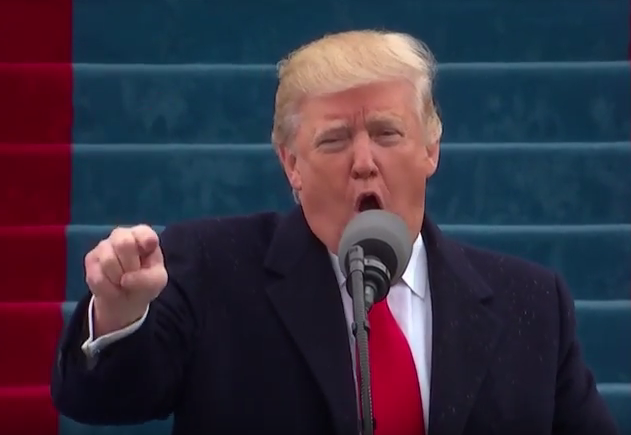
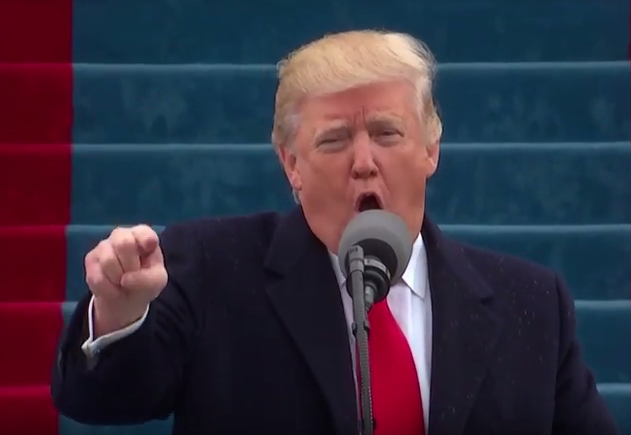
During the last few years at Toastmasters, a global organization devoted to developing public speaking and leadership skills, I have evaluated dozens if not hundreds of speeches and given structured feedback to speakers. Hence, analyzing Trump’s inaugural address felt like the most natural thing to do.

The intriguing question was: Trump is an excellent speaker but also an exceptionally contradictory person – how would he do in his first speech as president?

While the speech had a number of technically good elements, as a whole it was a disappointment. Here’s why.

The goal of the speech

In the first place, the success or failure of a speech is related to its goal.

According to Trump’s advisers, the goal of the speech was to reach out and unite the country.

Everyone who Trump attacked during his campaign – that is, most Americans – listened to his speech very carefully. This was a unique opportunity for him to mend burned bridges.

Still he didn’t utter a single positive word about Hillary Clinton or her supporters, about women, latinos, muslims, immigrants, sexual minorities, the disabled, Democrats, Republicans, the media, the US intelligence community or the foreign allies of the US. Nor did he provide any positive message for those concerned about climate change or national security. The same applies to those angered by his habit of constant lying.

All these people were disappointed in Friday’s speech. Down the line, they’ll be ever harder to convince by anything Trump says.

Talking to a hostile audience is one of the most difficult situations a speaker might face.

Although most of the live audience were Trump supporters, the main audience of the speech consisted of all 320 million Americans, and secondarily, the rest of the world. Trump is supported by a minority of Americans and by an even smaller minority of non-Americans. In fact, slightly short of 20 percent (63 million people) of all Americans walked into a voting booth and voted for Trump.

A speaker facing a hostile audience often doesn’t even try to win it over because it’s a tough job. However, the newly elected leader of a nation needs to try to unite his country and to get at least some sympathy from his adversaries. It would help him tremendously in his work.

Yet it seems like the real goal of Trump’s speech was not reaching out and uniting the nation, but rather pleasing his established supporters and perhaps trying to rationalize his upcoming policies as president.

In humoring his supporters, Trump’s speech was probably successful. He repeated his tried and tested, simple campaign messages. The speech also fit well with his stated strategy of bypassing the political parties and the media and talking directly to his supporters instead.

In trying to rationalize his upcoming policies, the speech was a failure, however. The message didn’t hit home with a critical listener. It was simply too illogical and too far removed from reality. One needs to be pretty deep in Trump’s world in order to imagine having heard anything even close to watertight argumentation.

For hard-core Trump supporters, the argumentation may have worked. So, it’s really all about what the goal of the speech was. Unfortunately, that we don’t know.

Using high status

High and low status are terms used in the world of theater. High status refers to a person adopting a dominant position relative to those around him. High status can communicate for example self-confidence or arrogance. Trump’s performance on Friday – as his performances during the campaign trail – was pure high status.

Some expressions of high status we saw in the speech were a low tone of voice, slow and clearly articulated speech, a head barely moving, a severe and relatively expressionless face, mouth and lips pointing outwards as well as half-closed eyes and frowning.

In addition, we saw a relatively motionless body with only the arms making controlled gestures. Trump kept his hands far from his head. The palms of his hands would often be open, fingers apart from each other, with one finger occasionally pointing at the audience.

These status techniques are straight from the book and they are studied at theater schools.

Public speakers tend to use high status most of the time and this is normally recommended. However, when exaggerated, the audience’s experience may tilt towards the negative connotations of high status, rather than the positive ones.

All of this, accentuated by the frequently aggressive tone of voice and message, gives an impression of the speaker overly emphasizing himself and placing himself above other people. The style appears authoritarian, especially when the speech includes passages such as ”There should be no fear. We are protected, and we will always be protected.”

Here the speech starts to sound like the talk of an omnipotent father figure, who expects the audience to see themselves as his subjects. Oddly enough, the ”I will protect you” message is contradictory to the all-American ideals of individualism, individual initiative and freedom as well as the cherished right for individuals to bear arms.

The manner Trump dressed for his address matched his speaking style: a black suit and overcoat together with a red tie communicate power.

Structure and content of the speech

Structure

Trump told the audience that the country is in a terrible state, called out the culprits and told that the future is bright.

The structure of the speech was clear. Trump used simple words, lots of powerful slogans and almost every word he pronounced was easy to hear. The good old rule of three, i.e. reciting lists of three things, was also frequently used.

Trump made effective use of pauses and some parts of the speech included powerful verbal imagery. The speech ended with a strong “Let’s make America great again” sequence, which probably worked well with his supporters.

On the other hand, Trump’s use of voice and his body language, while not monotonous, were quite repetitive, like a train going at a steady speed. This occasionally reduced the effectiveness of the words he spoke.

For example: reading the transcript of Trump’s speech, there are actually plenty of mentions that seem to aim at uniting the nation. Trump talked about ”healing our divisions”, about solidarity, ”we must debate our disagreements honestly”, ”there is no room for prejudice”, and ”whether we are black or brown or white”.

Still, when watching the speech on video, those words somehow don’t stand out as unifiers of the divided nation. It didn’t sound like the words were emphasized in the sense of rebuilding burnt bridges.

Part of this impression is also because the presumably unifying words were mostly presented in a somewhat odd context of ”[opening one’s] heart to patriotism”, ”total allegiance”, loyalty and ”a new national pride [that] will 
 heal our divisions”.

Many listeners would ask whether gay Americans are invited to that new pride? How about the latinos, muslims etc.?

Content

This brings us to the content of the speech, which caused the speech to fail except for Trump’s existing supporters.

Trump’s description of the horrendous state of the country was largely false and understood as such by most listeners. The US economy, industry, employment, crime rates and the military are not in such a catastrophic shape as he claimed. Those statements alone would be enough to strip most public speakers from much of their credibility.

Trump also told who are to blame, i.e. who the enemies are: politicians and foreign countries. This includes foreign businesses and people, whether they are immigrants, employees of foreign companies abroad or terrorists.

This means Trump wanted the audience to believe that even as president, he himself is not a politician. That’s not credible.

It’s also interesting to note who was missing from the list of enemies: the rich.

An old quote comes to mind here: ”What you are speaks so loudly that I cannot hear what you say”.

The isolationist tone of the speech was detached from reality. No country can isolate itself from the world, not even North Korea. In addition, many of the toughest issues facing individual nations can only be attacked through international cooperation.

The speech made no mention of climate change, even though it’s a far bigger issue for the US than radical Islamic terrorism – the only issue Trump mentioned as meriting the kind of international cooperation that he otherwise spoke so strongly against. Since 2001, the US hasn’t seen any significant radical Islamic terrorism and there have been no signs of it increasing within the the country’s borders.

For other countries, Trump’s message was menacing.

The ”America First” slogan is strange, as it’s always been clear that the US primarily seeks its own interest – just like any country. Again, the message seemed to be targeted only at Trump supporters, not to the nation.

The lack of logic in the speech continues.

“January 20, 2017, will be remembered as the day the people became the rulers of this nation again.” While Trump’s speech correctly used plenty of ”we” and ”you” instead of ”I”, one easily gets the impression that people might equal just one person. And if you look at the administration composed of millionaires, billionaires and family members, the notion of them representing the common man or woman becomes quite surreal in the listener’s mind.

Trump’s message of ”people” and ”a movement” can be understood from the fact that many of his supporters still feel that he honestly represents their interests.

So again, the message was apparently directed not at the nation but at Trump’s supporters.

Therefore, the big questions about this speech are: why did Trump not talk to his opposition? Was it only because he, as many public speakers, knows that it’s hard to convert those that disagree with you?

End note: a speech evaluator’s difficult task

It was no easy task to evaluate Trump’s inaugural speech, because I, like everybody else, already had an opinion about him. Yet, one should try to evaluate a speech from an objective viewpoint.

I have learned, both as a public speaker and as a speech evaluator, that each piece of feedback is only the point of view of a single person and therefore shouldn’t be taken too seriously. I have seen how even experienced evaluators give very different feedback on the same speech.

However, when honest and constructive feedback repeatedly generates similar comments to a speaker, then he or she can be quite confident that the feedback might be valid, whether it’s about one’s strengths as a speaker or about something one could try to improve.
Analyysi Trumpin virkaanastujaispuheesta – onnistunut puhe vai ei?

Trumpin odotetussa puheessa oli monia teknisesti hyviÀ elementtejÀ, mutta kokonaisuus jÀi miinuksen puolelle. Voisiko vaikkapa suomalainen vuorineuvos mennÀ Kontulan ostarille pitÀmÀÀn puhetta me-muodossa?

trump-virkaanastujaiset-puhe-20-1-2017

Olen viime vuosina Toastmasters-klubissa arvioinut kymmeniÀ ellei satoja puheita ja antanut niistÀ puhujalle strukturoidun palautteen. TÀmÀ Trumpin virkaanastujaispuheen analyysi syntyi siksi aika itsestÀÀn.

Eilen pÀÀssĂ€ pyöri ajatus: Trump on erinomainen puhuja, mutta poikkeuksellisen ristiriitainen henkilö – miten hĂ€n suoriutuu ensimmĂ€isestĂ€ puheestaan presidenttinĂ€?

Puheessa oli monia teknisesti hyviÀ elementtejÀ, mutta kokonaisuus jÀi miinuksen puolelle. Seuraavassa perustelut.

Puheen tavoite

Puheen onnistumista peilataan ennen kaikkea sen tavoitteeseen.

Trumpin neuvonantajien mukaan puheen tavoitteena oli yhdistÀÀ kansakuntaa. TÀssÀ puhe epÀonnistui. Miksi?

Kaikki, joita vastaan Trump oli hyökĂ€nnyt kampanjansa aikana – suurin osa amerikkalaisista – kuuntelivat virkaanastujaispuhetta tarkasti.

TÀmÀ oli Trumpin ainutlaatuinen tilaisuus korjata poltettuja siltoja. Kuitenkaan hÀn ei sanonut mitÀÀn positiivista Clintonista tai hÀnen ÀÀnestÀjistÀÀn, naisista, latinoista, muslimeista, maahanmuuttajista, seksuaalisista vÀhemmistöistÀ, vammaisista, demokraateista, republikaaneista, mediasta, USA:n tiedusteluelimistÀ, liittolaismaista tai muista ulkomaista.

HÀn ei myöskÀÀn antanut mitÀÀn positiivista viestiÀ ihmisille, joita huolestuttavat esimerkiksi ilmastonmuutos tai kansallinen turvallisuus tai niille, joita hÀnen jatkuva valehtelunsa suututtaa.

Kaikki nÀmÀ ihmiset pettyivÀt eiliseen puheeseen. Jatkossa heitÀ on yhÀ vaikeampi vakuuttaa.

Vihamieliselle yleisölle puhuminen on yksi haastavimmista puheenpitotilanteista. Vaikka suurin osa live-yleisöstÀ oli Trumpin tukijoita, puheen todellinen yleisö koostui ensi sijassa kaikista USA:n 320 miljoonasta asukkaasta ja toiseksi maailman yli 7 miljardista asukkaasta. SekÀ Yhdysvalloissa ettÀ maailmalla Trumpia tukee vÀhemmistö kansasta. Vain vajaa 20 prosenttia kansakunnasta (63 miljoonaa ihmistÀ) kÀveli ÀÀnestyskoppiin ja ÀÀnesti Trumpia.

Vihamielisen yleisön edessÀ puhuja ei usein edes yritÀ saada vastustajia puolelleen, koska se on vaikeaa. MenestystÀ tavoittelevan valtionpÀÀmiehen pitÀÀ kuitenkin yrittÀÀ yhdistÀÀ kansakuntaa ja saada vastustajilta edes sympatiaa. Se auttaa hallitsijaa hÀnen tehtÀvÀssÀÀn.

Vaikutti kuitenkin siltÀ, ettÀ Trumpin puheen todellinen tavoite ei ollutkaan kansakunnan yhdistÀminen vaan omien kannattajien kosiskelu ja tulevan politiikan perustelu.

Kannattajien kosiskelussa puhe ilmeisesti onnistui hyvin. Trump toisti samoja yksinkertaisia viestejÀ, jotka ovat toimineet aiemmin. Puhe sopi myös hyvin strategiaan, jossa Trump pyrkii ohittamaan puolueet ja median ja puhumaan suoraan kannattajilleen.

Trumpin tulevan politiikan perustelemisessa puhe ontui pahasti. Viesti ei mennyt perille kriittiselle kuulijalle. Puhe oli liian epÀlooginen ja liian kaukana totuudesta. PitÀÀ olla aika upoksissa Trumpin maailmassa, jotta voi kuvitella kuulleensa jÀrkeenkÀyvÀn sanoman.

Korkean statuksen kÀyttö

Trumpin tyyli oli – kuten vaalitilaisuuksissa – puhdasta ylĂ€statusta suhteessa lĂ€snĂ€olijoihin. Korkea status tarkoittaa dominoivaa kĂ€yttĂ€ytymistĂ€ suhteessa muihin ihmisiin. Se voi kertoa itsevarmuudesta tai ylimielisyydestĂ€.

Korkean statuksen – ja Trumpin eilisen esiintymisen tunnusmerkkejĂ€ – ovat muun muassa seuraavat: ÀÀni on matala ja puhe hidasta ja selkeÀÀ, pÀÀ ei liiku juuri ollenkaan, vĂ€hĂ€eleinen ja vakava ilme, huulet ulospĂ€in töröllÀÀn, otsa kurtussa ja silmĂ€t viiruina. Myös keho pysyi lĂ€hes paikallaan. LĂ€hinnĂ€ vain kĂ€det liikkuivat ja nekin pysyivĂ€t koko ajan kaukana puhujan pÀÀstĂ€, tekivĂ€t isoja kontrolloituja liikkeitĂ€ ja vĂ€lillĂ€ osoittelivat yleisöÀ sormella. KĂ€mmenet olivat yleensĂ€ auki ja sormet harallaan.

NÀmÀ statusilmaisun tekniikat ovat suoraan oppikirjasta, ja niitÀ opiskellaan teatterikouluissa.

Kun tĂ€hĂ€n lisĂ€tÀÀn puheessa usein esiintyvĂ€ aggressiivinen ÀÀnensĂ€vy, ilme ja viesti, tulee vaikutelma ettĂ€ puhuja korostaa itseÀÀn ja asettuu muiden ylĂ€puolelle. Tyyli viestii autoritÀÀrisyydestĂ€, erityisesti, kun puhuja sanoo ettĂ€ ”There should be no fear. We are protected, and we will always be protected.”

NĂ€in puhuu kaikkivoipa isĂ€hahmo, joka nĂ€kee muut alamaisinaan. Itse asiassa ”MinĂ€ suojelen teitĂ€â€ -viesti on ristiriidassa amerikkalaisen individualismin, vapauden ihanteen ja kansalaisten aseenkanto-oikeuden kanssa.

PuheenpitÀjÀt kÀyttÀvÀt yleensÀ suurimmaksi osaksi ylÀstatusta ja sitÀ myös suositellaan, mutta se ei saisi mennÀ överiksi. HyvÀ esiintyjÀ osaa luontevasti vaihdella korkean ja matalan statuksen vÀlillÀ.

Trumpin pukeutuminen natsasi edellÀ mainitun kanssa: musta puku ja takki sekÀ punainen solmio viestivÀt vallasta.

Puheen rakenne ja sisÀltö

Rakenne

Trump kertoi, ettÀ maan asiat ovat katastrofaalisessa tilassa, osoitti syylliset ja kertoi, ettÀ tulevaisuus on valoisa.

Rakenne oli selkeĂ€. Trump puhui yksinkertaisin sanakÀÀntein, ja sanoista oli helppo saada selvÀÀ koko puheen ajan. HĂ€n kĂ€ytti tehokkaasti taukoja, ja puheen lopetuksena oli vahva Let’s make America great again –osio, joka nostatti henkeĂ€ kannattajien keskuudessa. Puheessa oli kannattajiin vetoavia sloganeita ja jonkin verran hyvÀÀ kuvakieltĂ€.

Toisaalta ÀÀnenkÀyttö, puheen painotukset ja kÀsien liikkeet olivat aika tasapaksuja. Tasaista paukutusta alusta loppuun. TÀmÀ vei tehoa puhujan lausumilta sanoilta.

Esimerkki: kun puheen lukee kirjoitettuna, siitĂ€ löytyy kohtia, jotka nĂ€yttĂ€vĂ€t pyrkivĂ€n jakautuneen kansakunnan yhdistĂ€miseen. Trump puhui solidaarisuudesta, haavojen parantamisesta, ”America is united”, ”We must debate our disagreements honestly”, ”
there is no room for prejudice”, ”
olimme sitten mustia, ruskeita tai valkoisia
” jne. Kuitenkin nĂ€mĂ€ kaikki ilmaisut tuntuvat hukkuvan vaikutelmaan, ettĂ€ puhuja ei korosta niitĂ€ ja lisĂ€ksi tuntuu kommunikoivan aggressiivisesti.

TĂ€ssĂ€ kohtaa tulee mieleen vanha sanonta: ”What you are speaks so loudly that I cannot hear what you say”.

SisÀltö

Puheen rakenteen toimimattomuuden toinen suuri syy oli sen sisÀllössÀ.

Trumpin kuvaus maan huonosta tilasta oli pitkÀlti valheellinen ja epÀuskottava suurimmalle osalle kuulijoista. Yhdysvaltain talous, teollisuus, työllisyys, rikollisuus tai armeija eivÀt ole siinÀ katastrofaalisessa jamassa mitÀ Trump vÀitti. NÀmÀ vÀitteet yksin riittÀisivÀt viemÀÀn uskottavuuden suurimmalta osalta puhujia. Viesti upposi varmasti moniin Trumpin kannattajiin, mutta muu yleisö sai vain lisÀvahvistusta Trumpiin kohdistuville epÀilyksilleen.

Trump kertoi myös, kenen syytÀ ongelmat ovat eli ketkÀ ovat vihollisia: poliitikot ja ulkomaat. Ulkomaat kattavat tÀssÀ sekÀ toiset valtiot ettÀ ulkomaiset yritykset ja ihmiset, olivat he sitten maahanmuuttajia, ulkomaisten yritysten työntekijöitÀ tai terroristeja.

Trump siis myy yhÀ ajatusta, ettei hÀn itse edes presidenttinÀ olisi poliitikko.

On myös mielenkiintoista huomata, kuka puuttui puheessa vihollisten listalta: oman maan rikkaat.

Trumpin kansallista etua ja eristÀytymistÀ korostava puhe on irrallaan todellisuudesta. Valtiot eivÀt voi eristÀytyÀ toisistaan, ei edes Pohjois-Korea. Monet yksittÀisten valtioiden suurimmista ongelmista ja uhista ovat ratkaistavissa vain kansainvÀlisellÀ yhteistyöllÀ.

Puheessa jÀi kokonaan mainitsematta esimerkiksi ilmastonmuutos, joka on USA:lle (ja maailmalle) huomattavasti isompi haaste kuin ainoa Trumpin mainitsema kansainvÀlistÀ yhteistyötÀ vaativa ongelma eli ÀÀri-islamistien terrorismi. Kriittinen kuulija ihmettelee, miksi ÀÀri-islamistien terrorismi olisi maailmasta eristÀytyvÀlle USA:lle ykkösasia, koska vuoden 2001 jÀlkeen maassa ei ole nÀhty merkittÀvÀÀ terrorismia eikÀ sen kasvusta nÀy merkkejÀ.

Trumpin viesti muille maille oli uhkaava. America first –iskulause on omituinen, koska tĂ€hĂ€nkin asti kaikille lienee ollut selvÀÀ, ettĂ€ Yhdysvallat aivan kuten kaikki muutkin maat ajaa ensi sijassa omaa etuaan. TĂ€ssĂ€kin puhujan tavoite on selkeĂ€sti vain kosiskella kannattajiaan, ei laajempaa yleisöÀ.

Paradoksaalisesti ensimmÀinen voittaja on Kiina, jonka vaikutusvalta Aasiassa kasvaa Trumpin torpattua USA:n ja Aasian vapaakauppasopimuksen. Vastaavasti USA:n vaikutusvalta pienenee.

Ja yhĂ€ absurdimmaksi menee: “January 20, 2017, will be remembered as the day the people became the rulers of this nation again”. MiljonÀÀreistĂ€ ja miljardööreistĂ€ koostuva porukka on todennĂ€köisesti USA:n historian kauimpana keskivertokansalaisesta oleva hallinto.

Trumpin viesti on ymmĂ€rrettĂ€vissĂ€ sitĂ€ kautta, ettĂ€ monet ”unohdettuun kansaan” kuuluvat tuntevat Trumpin edustavan heitĂ€. Siksi hĂ€n kĂ€ytti puheessa termiĂ€ ”me” puhuessaan itsestÀÀn ja rakennemuutoksesta kĂ€rsineistĂ€ kansalaisista.

Suomessa olisi aika surrealistista, jos vuorineuvos menisi Kontulan ostarille pitÀmÀÀn puhetta me-muodossa.

Lopuksi: puheen arvioijan vaikea tehtÀvÀ

Trumpin puhetta ei ole helppo arvioida, koska jokaisella kuulijalla on hÀnestÀ vahva ennakkokÀsitys. Kuitenkin puhetta pitÀisi yrittÀÀ arvioida objektiivisesti.

SekÀ puhujana ettÀ puheen arvioijana olen oppinut, ettÀ jokainen palaute on vain yksittÀisen ihmisen arvio ja siksi sitÀ ei pidÀ ottaa liian vakavasti. Olen nÀhnyt, miten kokeneidenkin palautteenantajien arviot samasta puheesta vaihtelevat paljon.

Toisaalta silloin, kun rakentavista ja vilpittömÀsti tehdyistÀ arvioista saa toistuvasti samaa palautetta, palautteessa on luultavasti perÀÀ. TÀmÀ pÀtee sekÀ puhujan saamiin kehuihin ettÀ kehitysehdotuksiin.