Just for the heck of it, a keynote speech in ten seconds 😀
It’s this time of the year again: the season of the Toastmasters autumn speech contests. All over the world, people are competing in two categories: humorous speeches and improvised speeches. Loads of fun.
This Saturday, I’ll be hosting this speech contest in Helsinki. It’s called an area contest, with participants from Finland and Estonia.
No one, except me, knows the topic of the improvised speeches. 😃 The contestants will find out the topic 30 seconds before they begin their speech. 😬
In the attached video from exactly a year ago, from the same contest, you’ll see a primer in stage presence and body language in ten seconds 😀
Also, you can find a couple of brief thoughts about hosting an event behind this link.
I’ll publish something more comprehensive on the topic of event hosting later this year.
For now, come and see a bunch of superb speakers at the event space ”Vapaakaupunki” at the Redi shopping center at Hermannin Rantatie 5 in Helsinki this Saturday, October 25 at 12:00 (doors open). The program starts at 12:15. The language of the contest is English.
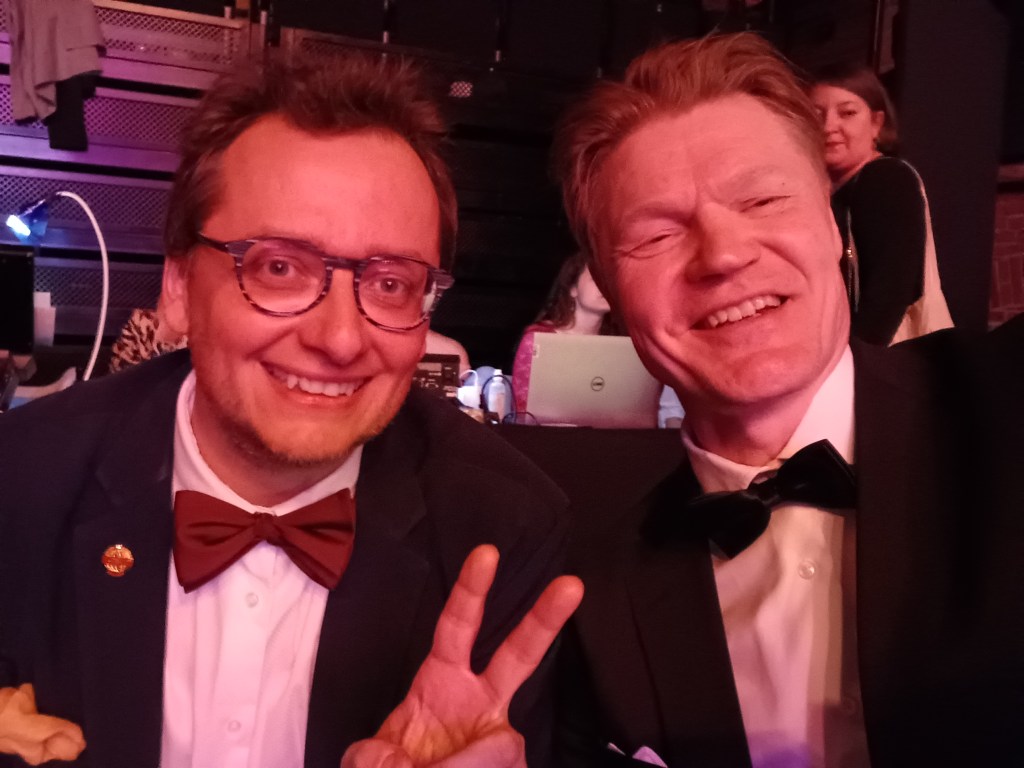
Waiting for my time to shine. Photo credit: Alessandro Rampazzo
Would you like to improve your public speaking skills in a hobby setting?
In addition to paid work in the public speaking coaching domain, the hobby side of practicing public speaking skills is now in full swing after the summer holidays.
Here are a couple of options that I’m familiar with, because I’m there myself 😃
Last Monday I gave a speech at the Stadi Talkers Toastmasters club.
It’s always a pleasure to be on stage at this club that meets at a bar downtown Helsinki. The audience is friendly and supportive. They don’t throw you with a pint of beer, even though based on the feedback I know that every speech of mine, while having its strengths, it also has room to improve for the next time. This club is in English. 🇬🇧
Stadi Talkers meets bi-weekly on Monday evenings at 6pm Finnish time, next time on September 8.
This Wednesday evening I’ll be hosting a Finlandia Toastmasters club meeting.
It’s otherwise the same as described above but this one is in Spanish. 🇪🇸 We have native speakers as well as mere mortals like me.
We are hybrid, so you can also participate via Teams from anywhere in the world. Meetings occur every second Wednesday at 6pm Finnish time. Bienvenid@!!!
The Famous Speeches Reading Club is something I started with a couple of friends last year.
As the name suggests, we practice public speaking skills by reading renowned texts, a method of learning that has been used already since the ancient Greeks. We read traditional speeches, movie speeches, poems… whatever contains impactful language in a compact package. This one is in English. 🇬🇧
We meet on Zoom every two weeks on Tuesday evenings at 6:15pm Finnish time for about one hour. Reach out if you’re interested in joining!
All in all, I would encourage you to use every opportunity you get to speak up and to be on stage, because the best way to improve your public speaking skills is to practice, practice, practice, constantly.
It’s a lifelong journey and today is a good day to begin.
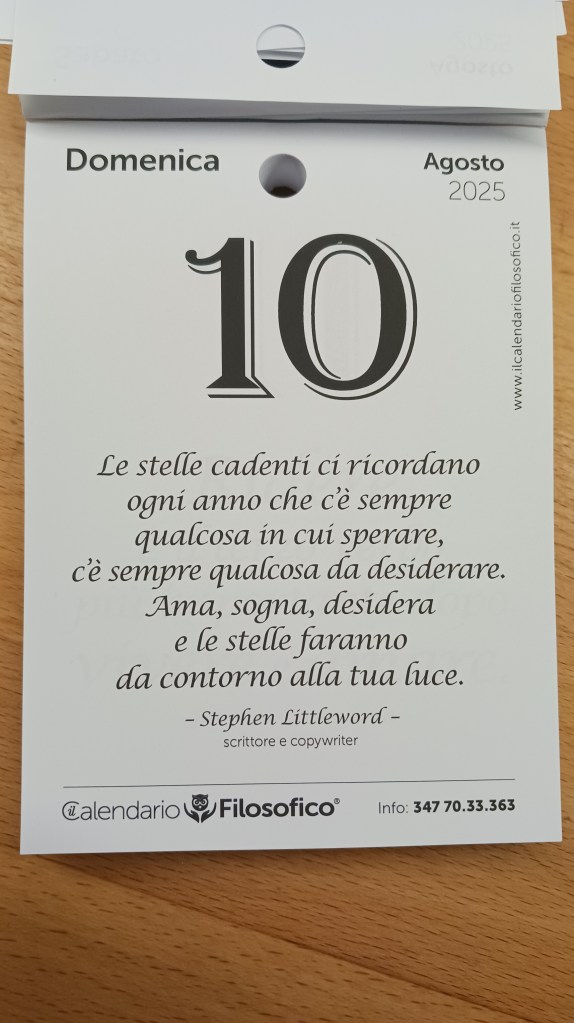
”Le stelle cadenti ci ricordano ogni anno che c’è seumpre qualcosa in cui sperare, c’è sempre qualcosa da desiderare. Ama, sogna, desidera e ele stelle faranno da contorno alla tua luce.”
”Shooting stars remind us every year that there’s always something to hope for, there’s always something to desire. Love, dream, desire, and the stars will frame your light.”
Pretty poetic. Or is it?
Here’s something useful for those who study the art of influencing people through language, e.g. for public speakers.
Note that the key term in this quote is different in different languages and gives a different message to the reader.
Usually something going upwards is understood as positive, and something going downwards is considered negative.
In Italian, ”stelle cadenti”, ”falling stars”, go down. That’s usually understood as something negative and not seen very often in quotes that are supposed to inspire.
So, why are the ”stelle cadenti” still inspiring for us? It’s because of another popular dichotomy used in metaphors: light versus darkness. Light is good, and shooting stars shine a bright light.
Herein lies the reason why the inventor of the above quote didn’t use the term meteor instead of a shooting star. After all, both words are about the same thing.
Our minds visualize a meteor more easily as something going down. In addition, the remains of a meteor are called by a similar term, meteorite, and a meteorite is made of dark stone. No shining light.
So, two bad things in a meteor. We are brought up learning that light is better than dark, and upwards is better than downwards.
Therefore, a ”shooting star” inspires, a ”meteor” does not.
The choice of words is of crucial importance for a writer, as well as for a public speaker.
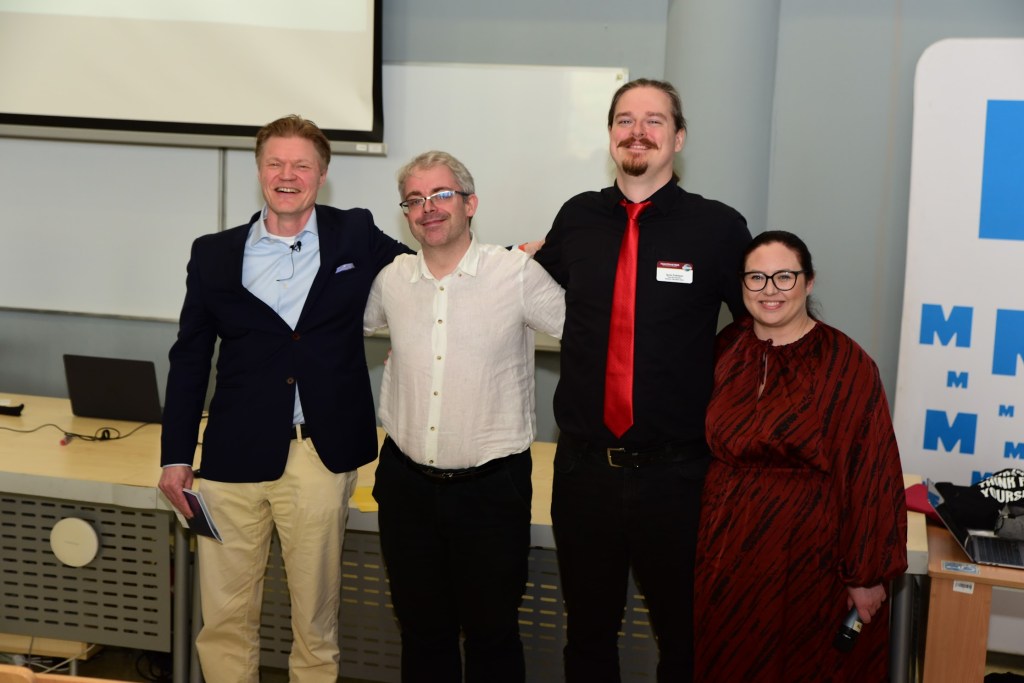
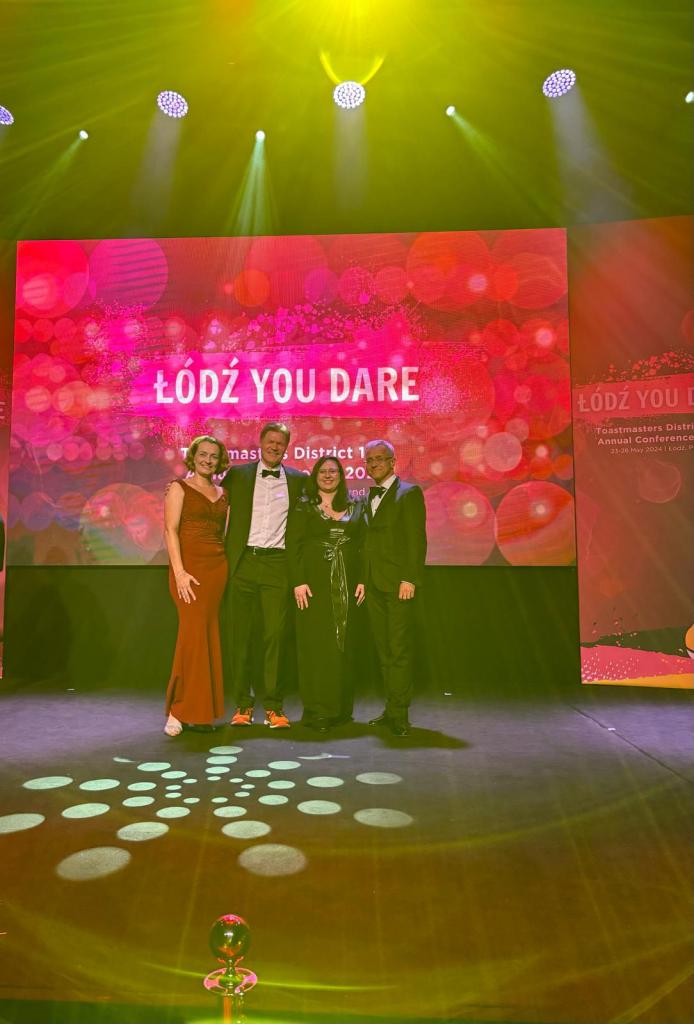
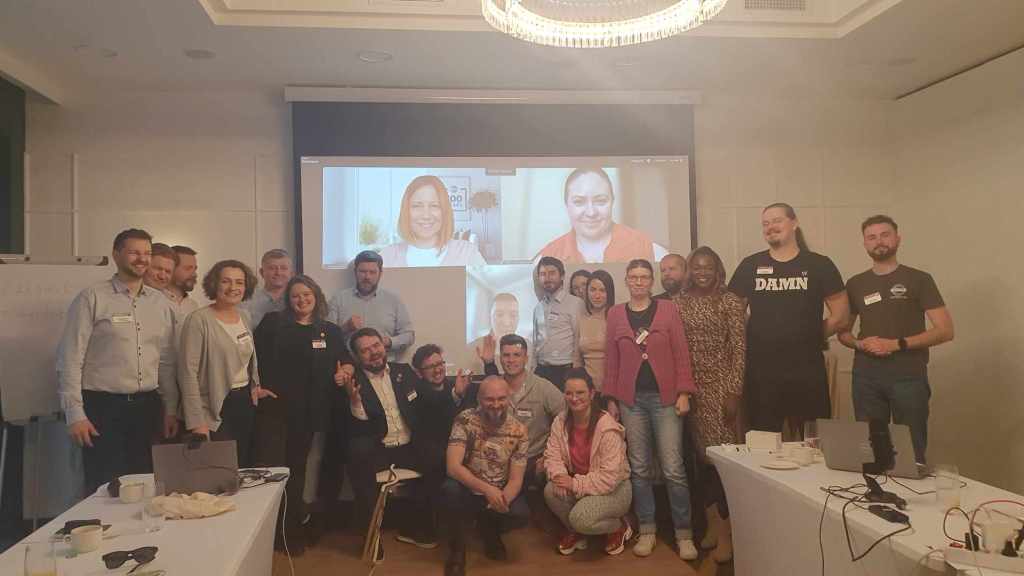
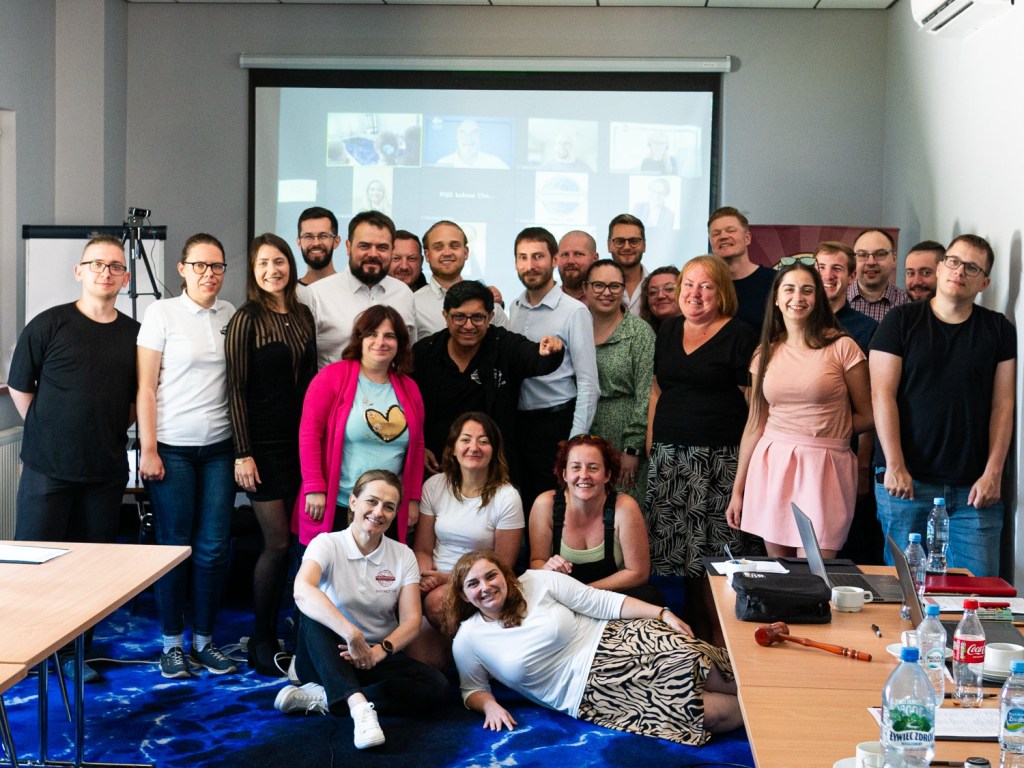
Four of the team members conducting a workshop at the Toastmasters district conference in Torun, Poland, in May. Photo credit Wiktor Guryn.Our team for this past year.Our team for the year 2023-2024.At the annual District Conference in Toruń in May 2025.At the annual District Conference in Łódź in May 2024.Four of our team members at the District 108 annual conference in Łódź in May 2024.Some of the District 108 Core Team members and Area Directors in the year 2024-2025.Some of the District 108 Core Team members and Area Directors in the year 2023-2024.
Getting big things done takes a village. At Toastmasters International, my public speaking organization, the year ends at the end of June. So, I thought it’s time to say thank you to a couple of good folks.
Today I have served two years as the Conflict Resolution Adviser and had the privilege to lead the Conflict Resolution Team for our Toastmasters International, District 108, comprising seven countries: Poland, Estonia, Latvia, Lithuania, Finland, Russia and Kazakhstan.
It’s been quit an incredible journey and it wouldn’t have happened without the following people.
Olga Turek-Woźniak was the first Conflict Resolution Manager at our District a few years back. She got things started, encouraged me to take this role and gave me good advice in the beginning.
Kamil Chmiel, as the District Director, asked me two years ago to accept the role of the Conflict Resolution Adviser in our organization. First I hesitated but I’m glad I said yes.
Łukasz Chomicz, as the District Director for the past one year, asked me to serve another year.
Kamil and Łukasz have been great partners in making things happen.
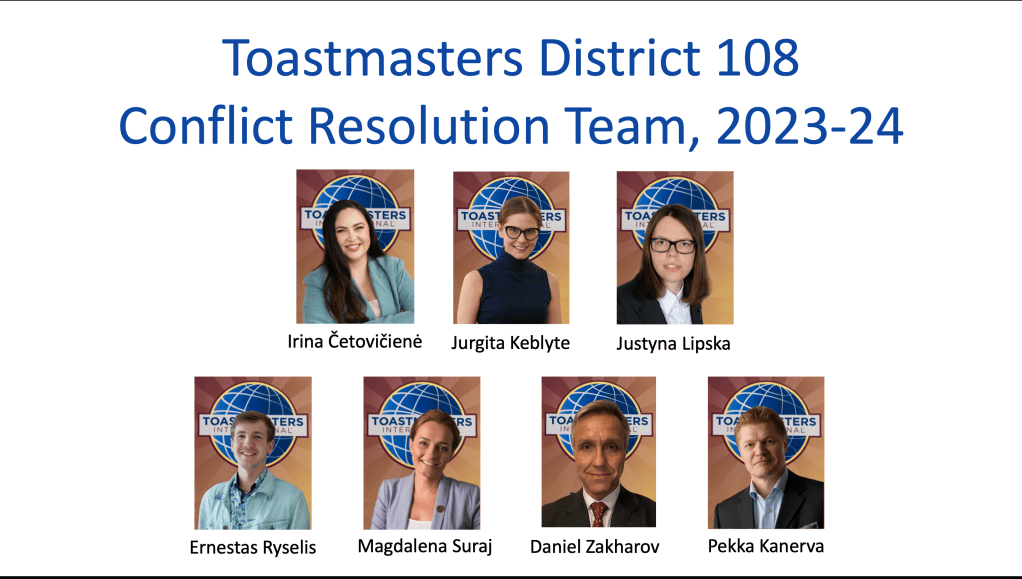
The fantastic fantastic Irina Četovičienė, Jurgita Keblyte, Justyna Lipska, Ernestas Ryselis, Magdalena Suraj and Daniel Zakharov served on my team in the 2023-2024 term.
The equally fantastic Roberto Bolomey, Irina Četovičienė, Paweł Lachowicz, Michał Moroz, Ignas Prakapas, Vadim Vasilyev and Karolina Wróbel served on my team for the 2024-2025 term.
With these teams, we have coached our Toastmasters members through tough spots, helped them manage and resolve conflicts, organized trainings and workshops and created a Conflict Resolution Guidebook for all our members to use.
Within these teams we have also supported, coached and educated one another.
One of my most memorable moments of these two years was when my team members said how much they had benefited themselves from learning more about conflict resolution.
We have not only helped other people but as a by-product, we have grown as human beings ourselves.
In addition to the team itself, my Polish brother, former Region 10 Advisor Piotr Chimko was always there, ready to converse about things big and small.
Working with Margherita Brodbeck Roth was one of my most rewarding and educational experiences in the past two years. Thank you.
Last but not least, there’s the Core Team of District 108, including our Area Directors: it’s been a tremendous honor and pleasure to work with each one of you. Oftentimes it’s also been a lot of fun. It would be too many names and too many fond memories to list here. You know who you are.
If I forget to mention someone, it’s because of my occasionally bad memory.
As to my biggest achievement in these two years, I think it is that I had the wisdom and luck to be able to recruit such talented and motivated members to my team. Together we have created a strong foundation for the future.
The future looks very good also because Michał Moroz will lead our conflict resolution function for the next year.
A new Toastmasters year begins tomorrow, so what next? Time will tell. For now, I’ll just cherish all the learning and all the friendships.
A heartfelt thank you to everyone who’s been part of this journey. As Ignas Prakapas said at our last team meeting, this is not a goodbye but a see you later!
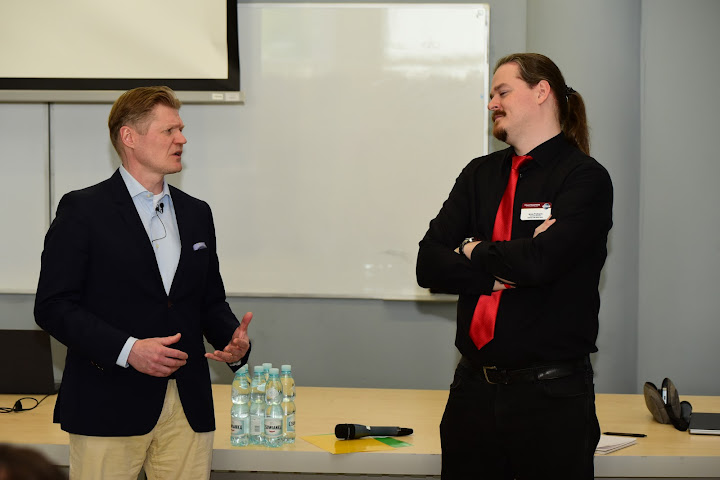
Ignas and Pekka performing a role play on corrective feedback. Photo credit: Wiktor Guryn.
Did you know that dealing with disagreements, conducting difficult conversations and resolving conflicts are skills that can be learned?
They are skills that can be learned just like public speaking, sales or leadership skills.
Your ability to respond to disagreements and conflicts as well as to conduct difficult conversations affects your happiness and success at work and in your private life, every day.
I have today served two years as the Conflict Resolution Adviser for a global public speaking organization that I’m a member of.
The organization is called Toastmasters International, and I’ve had the privilege to lead the Conflict Resolution Team at the organization’s fantastic District 108 comprising seven countries: Poland, Estonia, Latvia, Lithuania, Finland, Russia and Kazakhstan.
It’s been a pretty incredible journey and and these are some of the lessons I have learned:
A conversation, a disagreement or a conflict is primarily about emotions. Facts also count, but much less.
People have a deep need to feel heard, to feel acknowledged, to feel seen. They need to have their emotions acknowledged. Until that has happened, they are not prepared to listen to your point of view. That’s the key to conducting difficult conversations and resolving conflicts.
We usually don’t like to take the initiative to address conflicts because we are afraid that speaking out may put us in trouble. We are afraid of damaging a relationship, our status in our community, or our position at the workplace.
Yet, when we don’t speak out about our frustration, we tend to act it out. The other party is usually aware that something is wrong even if we don’t take the initiative to resolve the conflict.
The longer a conflict is allowed to simmer, the more difficult it becomes to solve. I have seen many conflicts that have been going on for years before someone speaks out.
Most conflicts start small and are about relatively small things. Often they are about nothing more than well-meaning people misunderstanding each other. Then they easily grow when people start expecting the worst from each other.
I’ve seen people take disagreements to court, even conflicts about seemingly small things, because feelings have been hurt. The sad thing is that a court of law is not a place to get your emotions acknowledged. From a court you don’t get justice, you get a verdict.
The good news, again, is that conflict resolution skills can be learned by anyone. It takes time and dedication, but it’s well worth it, and I believe it’s an investment that we all should make.
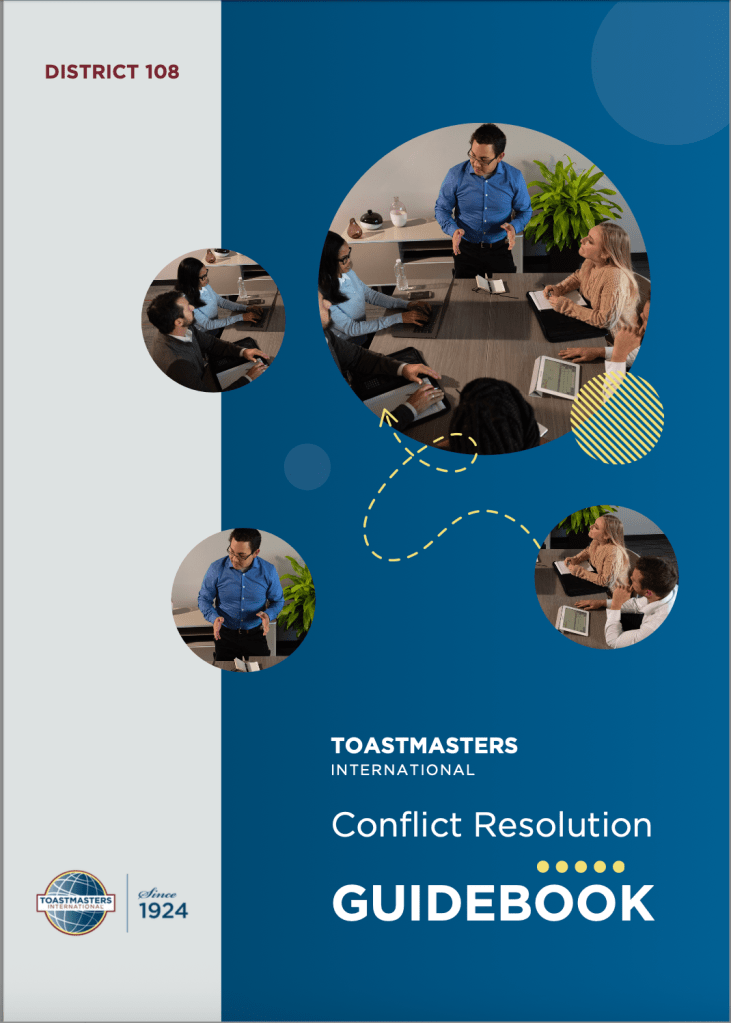
The guidebook is free of charge for anyone and I don’t even ask you to give your email address or any other information about yourself in exchange.
The only thing I ask from you is to read it, apply what you have learned and share it with anyone you think might benefit from it.
I believe this guidebook may be useful also for Toastmasters in other parts of the world, as well as basically any citizen of the planet.
This guidebook is brought to you by the Conflict Resolution Team of Toastmasters International, District 108: Roberto Bolomey, Irina Četovičienė, Paweł Lachowicz, Michał Moroz, Ignas Prakapas, Vadim Vasilyev, Karolina Wróbel and yours truly.
Proudly presenting the brand-new Conflict Resolution Guidebook published by our team. Photo credit: Wiktor Guryn.
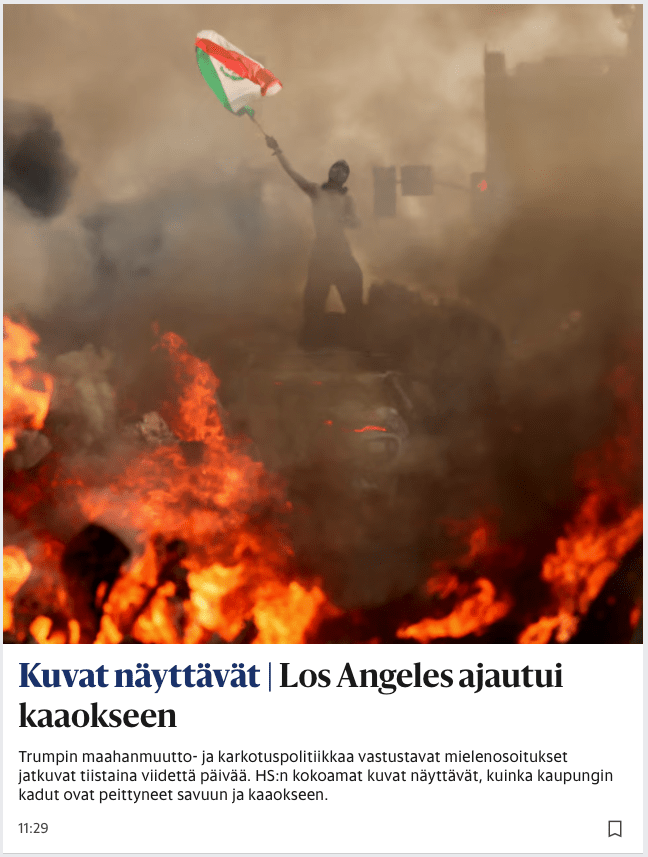
Kuvakaappaus Helsingin Sanomien nettiversion etusivulta 10.6.2025. Kuvakaappauksessa olevan valokuvan Helsingin Sanomat on hankkinut lähteestä David Swanson / Reuters. Linkki viitattuun Helsingin Sanomien uutiseen: https://www.hs.fi/maailma/art-2000011289702.html
Suomalaisen median uutisointi Los Angelesin mielenosoituksista näyttää tukevan Yhdysvaltain hallinnon valheellista versiota tapahtumista. Tämä ei ole ihan pieni asia journalismin mallimaassa.
Sanankäytön ammattilaiset, kuten esimerkiksi poliitikot, toimittajat tai vaikkapa puhetaidon kouluttajat, ymmärtävät miten ihmisiin voi vaikuttaa kehystämällä asiat tietyllä tavalla.
Sopivasti kehystämällä voidaan vaikuttaa siihen, miten ihmiset näkevät todellisuuden ja minkä mielipiteen he muodostavat yhteiskunnan tapahtumista.
Pahimmassa tapauksessa musta voidaan maalata valkoiseksi, kuten Yhdysvaltain hallinto yrittää tehdä puhumalla Los Angelesissa käynnissä olevasta ”kapinasta”, jota käytetään tekosyynä lähettää kaupunkiin tuhansia aseistettuja armeijan sotilaita.
Kuvassa Helsingin Sanomien printtiversion etusivu 10.6.2025. Lehden etusivulla näkyvien kuvien lähteet: ylempi kuva: lähdettä ei ole ilmoitettu. Alempi kuva: Ringo Chiu / AFP. Linkki lehden etusivuun: https://nakoislehti.hs.fi/65caf33d-65cb-4839-b086-cee1ccb99f18/2
Tämän aamun Helsingin Sanomien printtiversion etusivun otsikko on ”Kansalliskaarti lähetettiin tukahduttamaan kapinaa”.
Los Angelesissa ei ole mitään kapinaa.
Tänään uutisotsikoissa luki muun muassa ”Kuvat näyttävät – Los Angeles ajautui kaaokseen”.
Kaupunki ei ole kaaoksessa.
Eräässä kuvatekstissä luki ”Los Angelesia peitti paksu savu”.
Los Angeles ei ollut savun peitossa.
Uutiskuvien ja Yhdysvalloista tulleiden raporttien perusteella Los Angelesissa paloi lauantaina tasan yksi auto ja sekin oli ilmeisesti poliisin vahingossa sytyttämä.
Sunnuntaina näytti uutisoinnin perusteella palaneen kaksi tai kolme autoa.
Los Angelesin suurkaupunkialueella asuu 10-20 miljoonaa ihmistä ja siellä lienee miljoonia autoja.
Muutamasta palavasta autosta saa vaikuttavaa kuvamateriaalia, kun kuvat rajaa tehokkaasti ja niitä kierrättää uutisesta toiseen. Vaikka kuvat ovat aitoja, Los Angelesissa vallitsevan kokonaistilanteen kanssa näillä kuvilla ja teksteillä on kuitenkin hyvin vähän tekemistä.
Mielenosoitukset ovat suurimmaksi osaksi tapahtuneet varsin pienellä alueella ja ne ovat olleet voittopuolisesti rauhanomaisia. Näin sanoo myös paikallinen poliisi.
Kiinniotettuja/pidätettyjä oli Los Angelesissa ymmärtääkseni koko viikonloppuna vähemmän kuin maanantaisessa Elokapinan mielenosoituksessa Helsingissä.
Kaikki uutisointi, joka antaa harhaanjohtavan kuvan maailman tapahtumista on ongelmallista.
Vielä ongelmallisempaa harhaanjohtava uutisointi Los Angelesin mielenosoituksista on siksi, että yleensä luotettava media tulee raportoinnillaan tukeneeksi valheellista tarinaa, jonka tavoite on oikeuttaa autoritääristä politiikkaa Yhdysvalloissa.
Tässä on vahva teatterisuositus ja pieni pohdinta puhetaidon ja teatterin yhtymäkohdista.
Svetlana Aleksijevitšin Sinkkipojat-kirjaan perustuva samanniminen näytelmä on pyörinyt Vuosaaren Tilajakamossa jo vuoden, mikä kertoo jotain laadusta ja lippujen kysynnästä. Vihdoin pääsin katsomaan.
Aivan kuin saman teatteriryhmän ensimmäinen näytelmä, Neuvostoihmisen loppu, esitys on äärimmäisen yksinkertaisessa tilassa ja lavasteissa ja tehty vain neljän näyttelijän voimin, mutta kuitenkin se on vaikuttava ja ajankohtainen.
Käsitteleehän se Neuvostoliiton Vietnamia eli neukkujen hyökkäyssotaa Afganistaniin, jota putinistit eivät millään tahdo muistaa. Samalla näytelmä käsittelee myös Ukrainan sotaa.
1️⃣ Visualisointi
Vaikuttavaa symboliikkaa on, kun alussa näyttelijät marssivat näyttämölle ikoneja kantaen. Yllättäen he pilkkovat ne kirveellä puukalikoiksi ja naulaavat niistä itselleen rynnäkkökiväärit. Harvoin näkee abstraktin asian visualisoitavan noin vakuuttavasti. Uskonto on mahtava ase.
2️⃣ Puheenpito teatterissa ja elokuvassa
Elokuvissa nähdään usein vaikuttavia ja inspiroivia puheita, jotka jäävät elämään, mutta harvemmin vaikuttavia puheita näkee suomalaisessa teatterissa.
Tällaisen puheen näytelmässä pitää Aleksijevitšia itseään esittävä roolihahmo, joka pitää ajatuksia herättävän oikeussalipuheen.
Oikeussalipuhe ovat yleinen myös elokuvan kliimaksina, kuten Jack Nicholsonin ja Tom Cruisen kohtaaminen elokuvassa A few good men.
Aleksijevitš puhuu siitä, miten diktatuurissa kaikki ovat järjestelmän uhreja: hyvät ja pahat, naiivit ja pragmaatikot.
Jos olet kaukana vallasta, sinulla ei mene hyvin. Jos olet lähellä valtaa, silloinkaan sinulla ei mene hyvin, koska siipesi saattavat milloin tahansa palaa rakkaan johtajan mielijohteesta. Johtajaa on pakko myötäillä. Kaikki ovat orjia.
3️⃣ Aivan kuten hyvä puhuja, myös valtion propaganda ymmärtää kohderyhmänsä psykologiset tarpeet
Yksi näytelmän teema on se, miten turha kaikkien diktatuurin sotaan lähettämien ihmisten kuolema on ja miten absurdia ja yksittäiselle ihmiselle käsittämätöntä koko touhu on.
Jokaisen Ukrainaan lähetetyn venäläisen sotilaan kuolema on turha. Tätä heidän perheidensä on ymmärrettävästi vaikea myöntää. Kuolleen sotilaan äidin mielenterveys vaatii keksimään kunniallisen selityksen pojan kuolemalle.
Ihmisen, ja varsinkin oman lapsen, kuolema on niin valtava asia, että sille täytyy keksiä joku jalo syy.
Valtion propaganda tarjoaa selityksen ja on houkuttelevaa niellä se.
Diktatuurin alamaiset peittävät syyllisyydentunteensa ja häpeänsä hokemalla, välillä suorastaan raivokkaasti, vain tehneensä mitä käskettiin. Ihmisen psyyke hajoaisi, jos hän myöntäisi toimintansa vääryyden. Jossain syvällä sielussa omatunto kuitenkin kolkuttaa.
How do you host an event…and also act as a coach to the speakers?
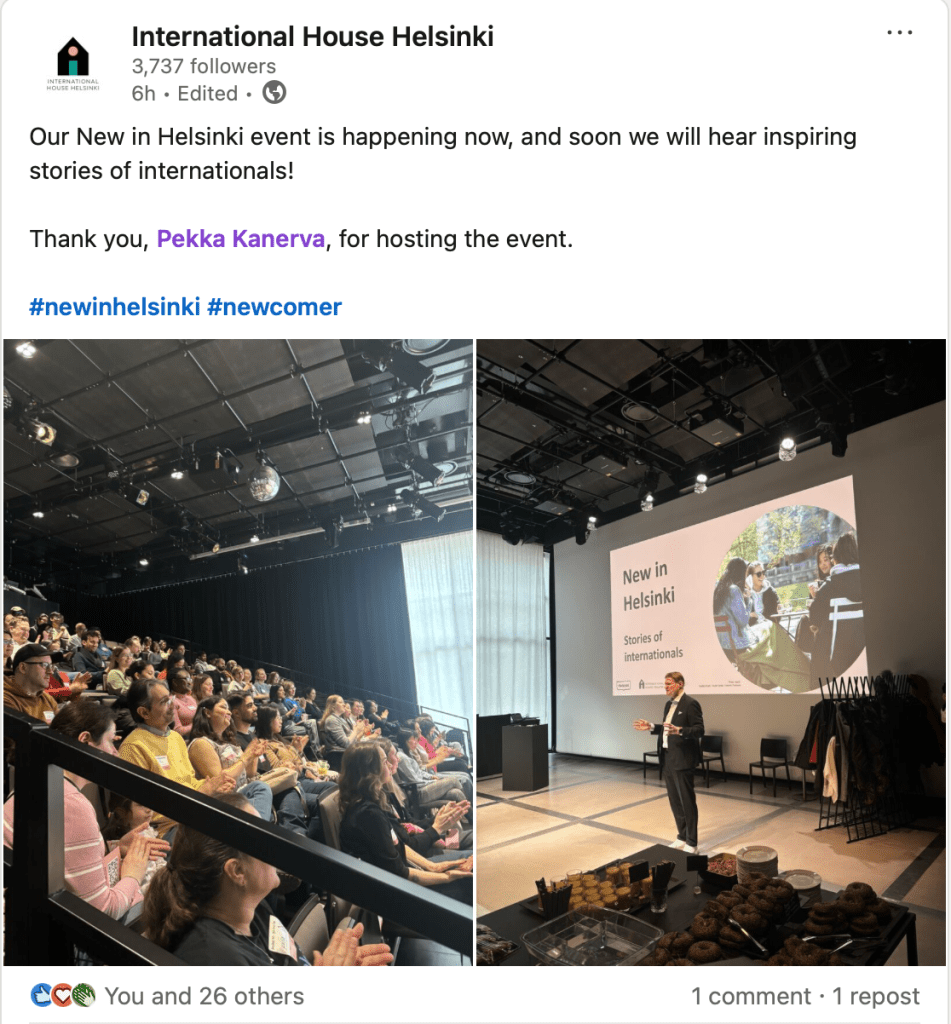
Here’s a snapshot of my day yesterday, preparing to emcee an international event tomorrow night:
– Change of plans: one of the speakers had to cancel!
– Coaching the speakers preparing for their talks.
– Preparation meeting with the client, the organizers and the production company.
– Update my script and continue rehearsing.
– Visit dentist
Yes, the first thing I saw in the morning was a message from one of our speakers: they had to cancel their participation in the event. Contrary to what many think, this is business as usual and happens all the time. We discussed a plan B (and C, D, E and F ) with the organizers and went ahead with a solution. The content of the event continues to be solid.
Acting as both the emcee of the event and a coach to the speakers.
This is slightly more complex than what it sounds.
Coaching public speakers is fun and rewarding, and there are actually many benefits when the host of the event is also the trainer to the speakers and panelists.
First of all, you get to know the speakers and the content they will deliver in advance. This makes it so much easier for you to interact with the speakers while on stage.
You’re also able to give more insightful comments on the content of their talks to the audience.
In addition, you’re able to coordinate the roles and content of the speakers during the Q&A or a panel discussion.
This makes your panel discussion stand out from 99% of panel discussions, by not being boring.
Finally, you will know that the speakers will deliver fantastic talks as you yourself have helped them prepare and rehearse. …Well, of course only if you’ve done a good job
By the way, there’s an interesting dichotomy here: many emcees don’t exactly shine as excellent listeners, and a speech coach needs to have advanced active listening skills. Many people are both good listeners and good speakers, but not everyone.
Visit dentist: a piece of my tooth broke! I don’t want to have a toothache while on stage! Fixed!
Other activities yesterday included a final planning meeting with the organizers and again, updating and rehearsing my script.
The photo depicts a speaker coach at the end of a rehearsal session with one of the speakers. I guess I’ve gotta shave and get a haircut before climbing on stage.
How do you prepare to be the master of ceremonies and lead a panel discussion at an event?
Well, in many ways. Here’s a snapshot from today, preparing for a gig on Wednesday:
Today, as every day until the event, I’ve been rehearsing my script.
For instance I’ve been thinking on how to make sure my choice of words will work for both native English speakers as well as for an audience coming from all continents except where the penguins live.
How will I handle audience questions to the American panelists if the discussion turns to American politics?
Should I wear orange, my go-to color that energizes both the audience and me, or something else?
One thing I know for sure: the song I want played when I walk onto the stage.
It’s my feel-good song since already for weeks now. Has to do with sauna.
Hosting events is fun and rewarding. I consider to have succeeded when I get the speakers to shine and the audience to be satisfied with the event.








 Yes, the first thing I saw in the morning was a message from one of our speakers: they had to cancel their participation in the event. Contrary to what many think, this is business as usual and happens all the time. We discussed a plan B (and C, D, E and F
  ) with the organizers and went ahead with a solution. The content of the event continues to be solid.
 Acting as both the emcee of the event and a coach to the speakers.

 Visit dentist: a piece of my tooth broke! I don’t want to have a toothache while on stage! Fixed!
 Would you like to become a better communicator?