Tag Archives: Public speaking

How do you host an event and also act as a coach to the speakers?

How do you host an event…and also act as a coach to the speakers? 🔥

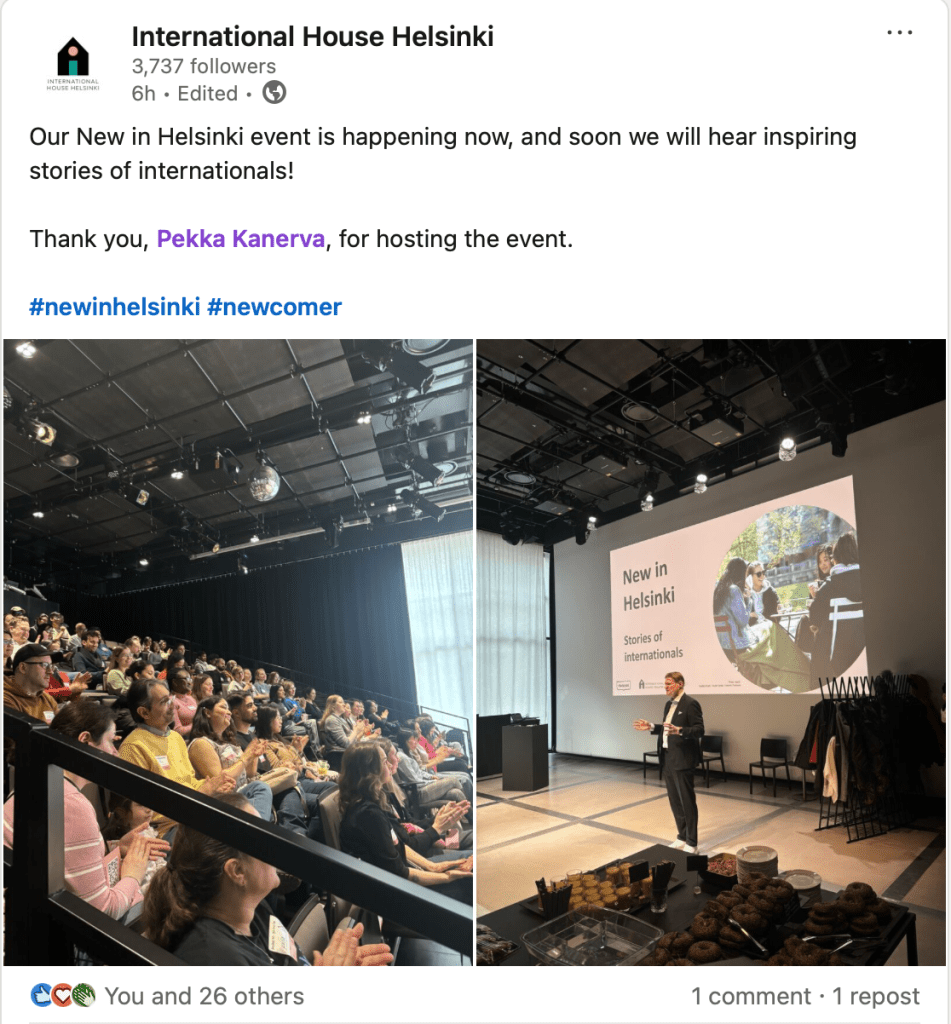
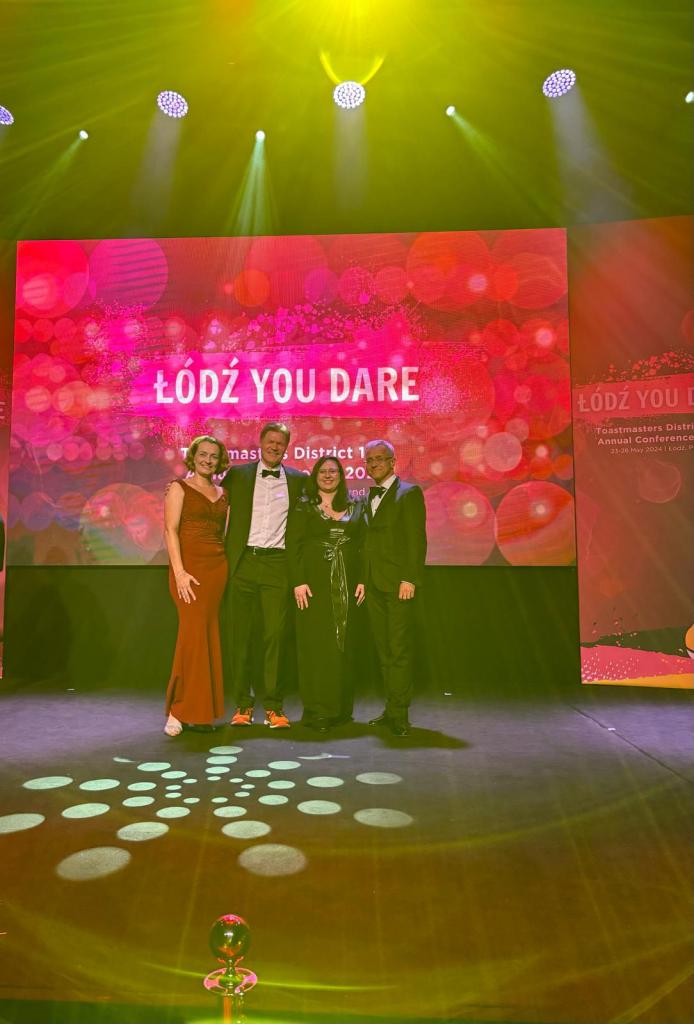
Here’s a snapshot of my day yesterday, preparing to emcee an international event tomorrow night:

– Change of plans: one of the speakers had to cancel!

Coaching the speakers preparing for their talks.

– Preparation meeting with the client, the organizers and the production company.

– Update my script and continue rehearsing.

– Visit dentist

1️⃣ Yes, the first thing I saw in the morning was a message from one of our speakers: they had to cancel their participation in the event. Contrary to what many think, this is business as usual and happens all the time. We discussed a plan B (and C, D, E and F 😀) with the organizers and went ahead with a solution. The content of the event continues to be solid.

2️⃣ Acting as both the emcee of the event and a coach to the speakers. 🔥

This is slightly more complex than what it sounds.

Coaching public speakers is fun and rewarding, and there are actually many benefits when the host of the event is also the trainer to the speakers and panelists.

First of all, you get to know the speakers and the content they will deliver in advance. This makes it so much easier for you to interact with the speakers while on stage.

You’re also able to give more insightful comments on the content of their talks to the audience.

In addition, you’re able to coordinate the roles and content of the speakers during the Q&A or a panel discussion.

This makes your panel discussion stand out from 99% of panel discussions, by not being boring.

Finally, you will know that the speakers will deliver fantastic talks as you yourself have helped them prepare and rehearse. …Well, of course only if you’ve done a good job 😃

By the way, there’s an interesting dichotomy here: many emcees don’t exactly shine as excellent listeners, and a speech coach needs to have advanced active listening skills. Many people are both good listeners and good speakers, but not everyone. 🤔

3️⃣ Visit dentist: a piece of my tooth broke! I don’t want to have a toothache while on stage! Fixed!
Other activities yesterday included a final planning meeting with the organizers and again, updating and rehearsing my script.

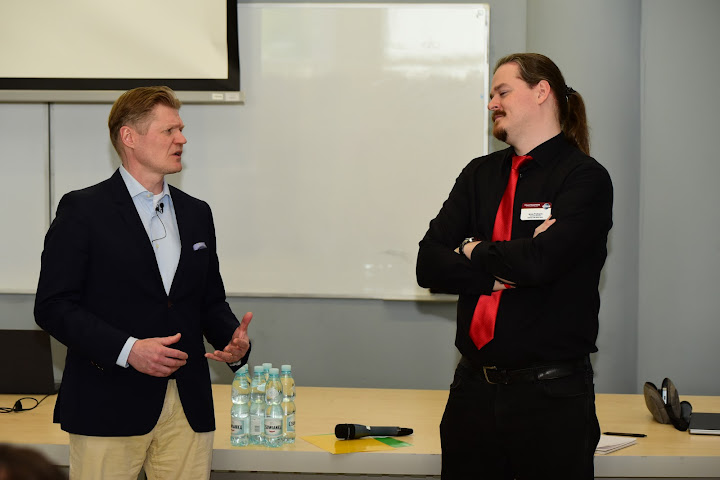
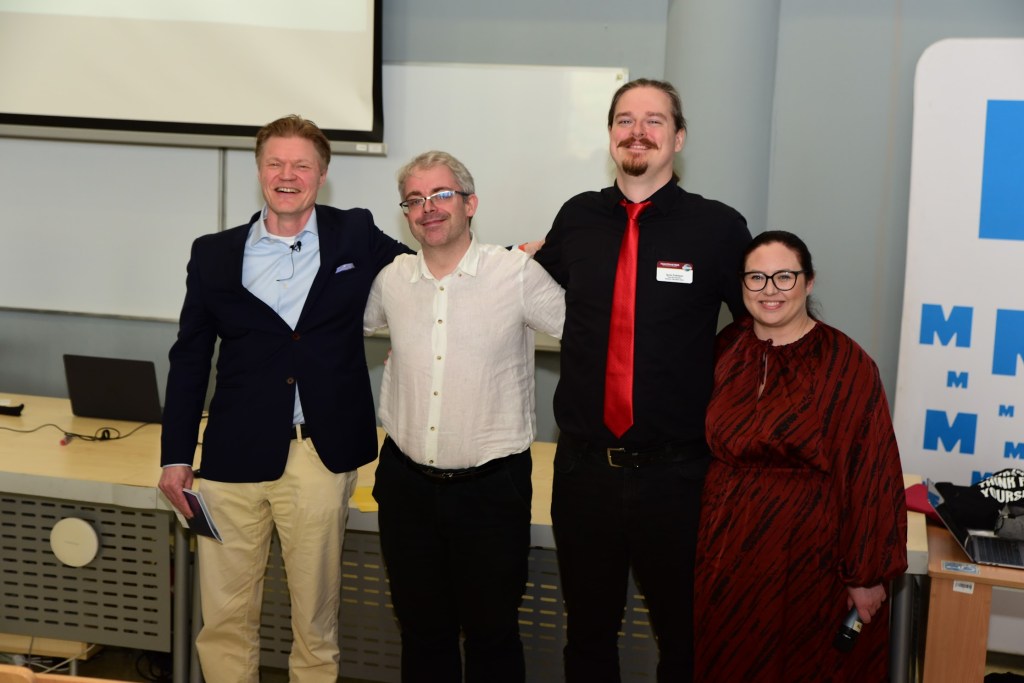
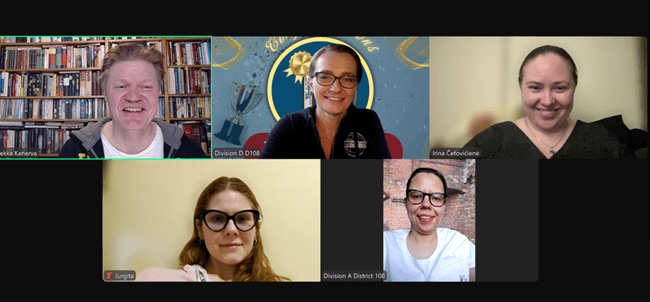
The photo depicts a speaker coach at the end of a rehearsal session with one of the speakers. I guess I’ve gotta shave and get a haircut before climbing on stage.

Link to the event (fully booked already, sorry) https://ihhelsinki.fi/events/new-in-helsinki-09-04-2025/

How do you prepare to be the master of ceremonies and lead a panel discussion at an event?

How do you prepare to be the master of ceremonies and lead a panel discussion at an event?

Well, in many ways. Here’s a snapshot from today, preparing for a gig on Wednesday:

1️⃣ Today, as every day until the event, I’ve been rehearsing my script.

For instance I’ve been thinking on how to make sure my choice of words will work for both native English speakers as well as for an audience coming from all continents except where the penguins live.

2️⃣ How will I handle audience questions to the American panelists if the discussion turns to American politics?

3️⃣ Should I wear orange, my go-to color that energizes both the audience and me, or something else?

One thing I know for sure: the song I want played when I walk onto the stage. 😃

It’s my feel-good song since already for weeks now. Has to do with sauna. 😀

Hosting events is fun and rewarding. I consider to have succeeded when I get the speakers to shine and the audience to be satisfied with the event.

Click this link to know where to go this Wednesday evening! https://ihhelsinki.fi/events/new-in-helsinki-09-04-2025/

The best kept secret to acquiring superb public speaking skills

On this day, a hundred years ago, the first ever Toastmasters meeting took place in California. 

Fast forward a hundred years, here I am, giving a keynote speech and an event in Estonia last weekend. 😃😃😃

Thanks to Toastmasters, I have become a better speaker, trainer and coach. Here’s to the next one hundred years! 🎊🎉🎂

If you want to become a more confident speaker, check out your closest Toastmasters club.

How can you benefit personally by helping others manage difficult conversations?

There are conflicts between people in all organizations. Toastmasters, an organization dedicated to helping people excel at public speaking, is a rare exception in having had the wisdom to of set up a conflict resolution function within its organization. 

What do I mean by a conflict? 

Conflicts are usually the quite mundane issues and arguments between people at a business, at a hobby or at home. 

Most often it’s about someone having insulted another person, either on purpose or unknowingly. 

Then, over the weeks, months and surprisingly often even years, the issue grows. People avoid talking to each other and instead talk negatively about others behind their back. 

A huge amount of people’s energy is wasted in a negative spiral, instead of productive work. 

Stress levels rise.

All this prevents organizations from achieving their full potential. It makes it harder for people and organizations to reach both their short- and long-term goals, whether they are about sales, profit or qualitative goals.

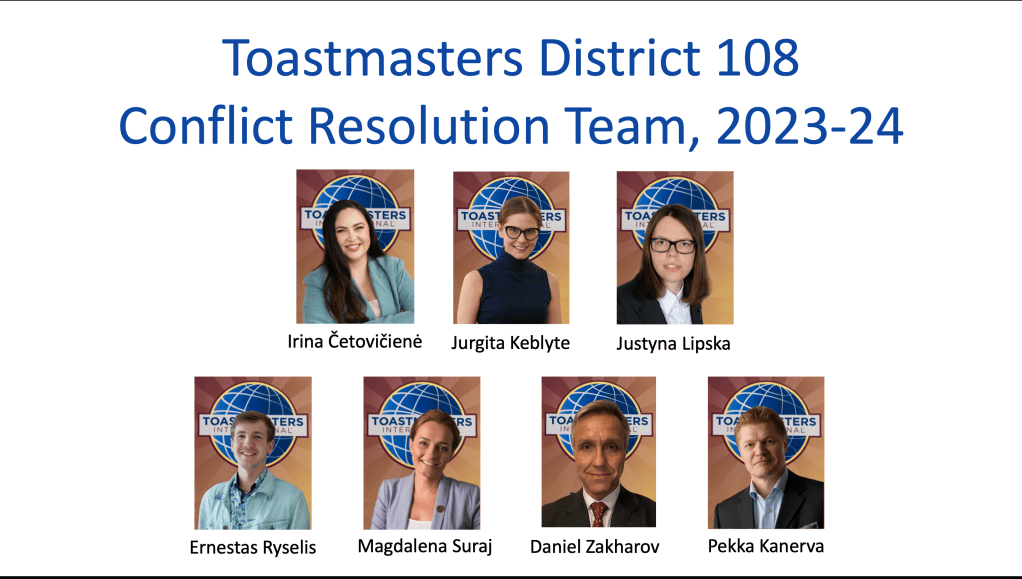
For the past twelve months, I’ve had the privilege of running a conflict resolution team at Toastmasters. While the organization is global, my district consists of seven countries and about 2,000 members from the Baltics, Finland, Kazakhstan, Poland and Russia. 

For the past year, the team led by me has been able to help people resolve a number of issues between people. As a result, this district has been more effective and better reached its goals, as well as supported the well-being of the members. 

Recently, something extraordinary happened at the final meeting of the outgoing conflict resolution team. 

I asked everyone to tell what has been good about our activities, as well as what could be done better next year. To my surprise, everyone mentioned something I didn’t expect. 

Everyone said that in addition to having been able to help other people, they had grown personally.

Helping other people resolve their conflicts had made all group members more aware of their own behavior in conflict situations. As a result, they had begun to think about new ways to navigate through difficult conversations of their own.

I realized that I had had exactly the same experience. For example, I now react more calmly in a difficult situation than before. 

I’m also more aware of the different ways of behavior I can choose from when a potential conflict arises. 

Increasingly, I become conscious of the various options on the spot, instead of as an afterthought: “I wish I had said this and that” or “I wish I had not said this and that”. 

It turns out that helping other people resolve difficult situations was a twelve-month free of charge self-development course.

So, huge thanks to Magdalena Suraj, Irina Cetoviciene, Daniel Zakharov, Jurgita Keblyte, Justyna Lipska and Ernestas Ryselis for serving in the team. 

Special thanks Kamil Chmiel for coming up with the idea in the first place, and to Piotr Chimko and Olga Turek-Wozniak for encouraging me to take on the challenge. 

Does your organization have a conflict resolution adviser?

Artificial intelligence and humans competed in public speaking – who won?

Trying hard to deliver a speech as it was generated on the spot by artificial intelligence.
Photo credit: Polina Feshchenko

This week artificial intelligence (AI) and humans competed against each other for the first time at a public speaking club in Helsinki.

The task was to give a short, improvised speech about a topic given to the speakers on the spot. The speakers, including ChatGPT, had just thirty seconds to prepare on stage before delivering the speech.

ChatGPT’s speech topic was “Explain to a five-year-old what the internet is”.

This was the prompt given to the computer:

Write a humorous two-minute speech to a five-year old about the internet, with the past, present, future structure, containing five metaphors, two quotes and including the word contentious three times, and mentioning Tuomas, Topi and Lauri and the Stadi Talkers Toastmasters Club.

Here’s the speech generated by the computer, and delivered by the undersigned:

Good morning everyone!

My name is Tuomas and I’m here to talk to you about the internet.

Let’s start with the past. Back in the day, the internet was like a dark and mysterious forest. It was full of secrets and surprises, but it was also a bit scary. You had to be careful not to get lost in the depths of the internet.

Now, let’s move on to the present. The internet is like a big playground. It’s full of exciting games, funny videos, and interesting people. It’s a great place to explore and learn new things.

Finally, let’s look to the future. The internet is like a giant library. It’s full of knowledge and information about almost anything you can think of. It’s also a great place to connect with people from all over the world.

Now, let’s talk about the people who use the internet. They are like a family. They share their experiences, their ideas, and their stories. They also help each other out when they need it.

The internet can also be a contentious place. People often disagree and argue about different topics. That’s why it’s important to be respectful and open-minded when discussing things online.

As Topi, one of the members of the Stadi Talkers Toastmasters Club, said: “The internet is a great tool for learning, but it’s also full of dangers. We must be careful to use it responsibly.”

And as Lauri, another member of the Stadi Talkers Toastmasters Club, said: “The internet is a great place to explore and discover new things, but it can also be contentious. We must be careful to stay safe online.” So, my five-year-old friend, remember to use the internet responsibly and stay safe!

Thank you for listening.

Let’s look at how the computer did.

What the AI did well and where it failed

  • The speech is complete and makes sense in many ways.
  • ChatGPT used the instructed speech format (past, present, future), even though halfway through the speech it completely abandoned it.
  • The speech contains a variety of metaphors, probably more than we’d see in an average two-minute speech.
  • There’s plenty of material in the speech that can be used when designing a real speech.
  • The speech was supposed to be humorous, but humor was missing.
  • The speech began with a “Good morning”, at 7pm in the evening.
  • ChatGPT made a wrong guess about the name of the speaker.
  • “Back in the day”, the internet was NOT like a dark and mysterious forest. It was actually a pretty joyful place.
  • ChatGPT had no meaningful vision about the future of the internet.
  • ChatGPT is usually good at finding quotes and addressing them to the correct person. In this speech, however, it put words in the mouths of the wrong people.
  • Last but not least, AI almost completely missed its target audience. ChatGPT did hardly anything to adjust its message to a five-year-old as instructed.

Who won the speech contest?

The contest was won by one of the humans. His speech was well structured, humorous, and to the point.

Out of the 23 voters at the club, only two gave their votes for ChatGPT.

In my next post, I’ll write about the implications of what happened in the contest. Stay tuned.

P.S. From now on, I’ll include a discussion about using AI in speech writing in all of my public speaking trainings.

How was the speech that won the World Championship in Public Speaking last night?

The winning speech at yesterday’s World Championship of Public Speaking.

Here’s the great speech that won the World Championship of Public Speaking last night. Watch it for your benefit!

This is my take on what was interesting in the winning speech and what anyone can learn from.

Courage is the key word

The main thing I saw was… courage:

  1. Courage to talk about a topic that comes from a non-Western cultural context.

  2. Courage to avoid exaggerations in body language, use of voice, and props.

    Why do I say this? Because in this contest the judges often reward you for such exaggeration, which looks slightly odd even for many Toastmasters members, let alone non-members.

  3. Courage to take a risk by choosing a speech title that is easily misheard and impossible to understand without hearing the speech itself.

    This sort of a choice about the speech title usually creates confusion in the audience.

    During the speech the audience actually found out that the difficulty to understand the name of the speech matched with the content and the message of the speech.

Other building blocks of a good speech

For me the main thing in any speech is that the content of the speech is clear and there’s a message that is relevant and easy to relate to.

Even better if the speaker is able to make the audience laugh.

The winning speech totally achieved each of the above goals.

I also saw great interaction with the audience. In this case, with a very large audience!

The speaker also did a great job of gradually building expectation during the speech. In this case, he did it by making the audience eager to hear another key word, and having them wait all the way until the end of the speech to hear it. This is a technique used both in suspense movies and in stand-up comedy.

This sort of performance looks easy when you watch it, but it takes not only great talent, but a huge amount of hard work. Like in Olympic sports.

Good to know about the context of this speech situation

Don’t expect to see a speech that takes a strong stance on an important current issue. In Toastmasters contests, you tend to be punished by the judges if you talk about something that can be interpreted as political. This is a challenge for the speakers as they still need to try to say something meaningful.

All in all, great job, incredible achievement, Cyril Junior Dim, well deserved!!

P.S. The topic of the speech was about the difficulty of being proud about what makes you different from everyone else. Because being different from those around you can put you into trouble.

As to myself, life has taught me that where people are different from others, or do something different from what most others do, is usually where they achieve their greatest heights of accomplishment and achievement.

Where we are different from others is what enables us to shine, and also succeed in life, whatever that means to each one of us.

But being different also takes… courage.

Do you find it hard to convince your audience when presenting a technology product?

If your answer to the question in the headline is yes, then this webinar is for you! (NB The webinar will be in SPANISH)

At the beginning of the year, I wouldn’t have thought I would end up as a panelist in South America this week. Not even virtually, from the comfort of my home in Finland. But here we are 😀 Time and again, I’ve seen that the best things tend to be those that are a bit out of the ordinary.

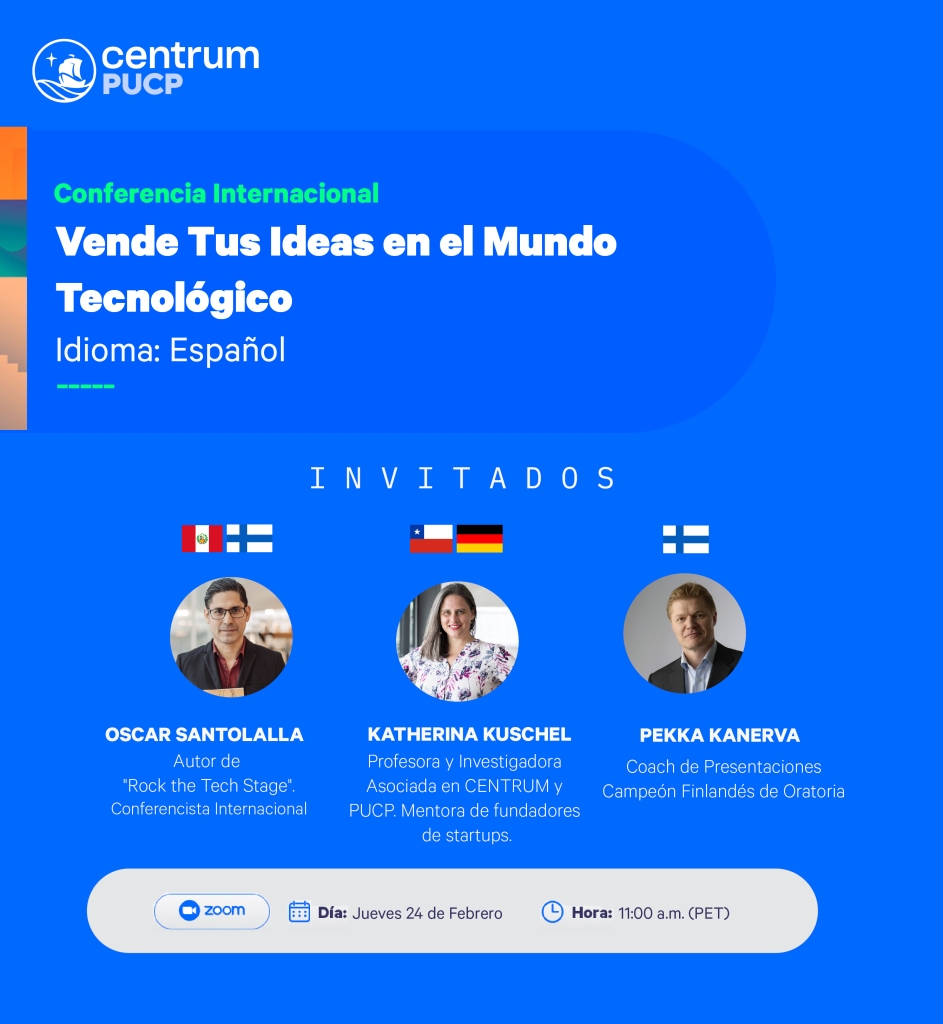
The event is organized by Centrum PUCP, one of the best business schools in all of Latin America. They created the below banner about the webinar and us speakers.

In the webinar, we will discuss:

  • What challenges public speakers in the tech industry tend to face?
  • How are those challenges best tackled?
  • Presentation techniques that separate the best from the rest 

We will of course use a lot of examples and personal stories from Nokia and other companies.

In addition to yours truly, the panelists will include Oscar Santolalla, who has written two books about presentation skills in the tech industry, as well as Katherina Kuschel, who teaches MBA students and coaches startup entrepreneurs in business skills. 

The event is open to everyone. You just need to sign up beforehand here https://zoom.us/webinar/register/WN_7bsgtK29SMiwykZObvr2Cg 

Time and date: Thursday, February 24, 2022 at 6pm Finnish time (5pm Central European time, 11am Peru). The duration of the event is one hour.

The organizers told me that more than 200 people have already signed up. You’re warmly welcome to join us!

What can you learn about public speaking by coaching public speakers?

What can you learn about public speaking by coaching public speakers?

Here’s three things I’m seeing lately:

Puhuja

  1. Back to the basics

    Whether the person is a beginner or an experienced speaker, their key areas to improve tend to be in the basics.

    For example, it’s surprising how many speakers forget to ask themselves what the goal of their talk is, or who their audience is, and how that should influence what they say. Hint: ”Informing the audience about x” is not a good goal for a presentation.

  2. Improving, fast and slow

    Some aspects of a person’s speech can be improved quickly, sometimes all that is needed is feedback in the form of a single sentence.

    For example, if someone talks too fast and monotonously, I often ask them to identify the single most important word or phrase in their presentation, and focus on saying that one slowly and clearly. The audience immediately gets the message better.

    Other stuff may take years to fix, but the pay-off could be huge. For instance, I needed a speech therapist and endless drills to learn how to pronounce the letter ”r” in my native Finnish.

  3. Observing a symptom is just the first step towards the cure

    When you see an issue with someone’s presentation, you often only see a symptom. To help the speaker overcome that symptom, it helps if you understand a bit more deeply the person you’re coaching and where they come from.

    For example, I met two speakers who both talked too fast.

    It turned out the first one had a background in college debate and simply had to unlearn the habit of always speaking fast when on stage.

    The second one had spoken too fast because she wanted to deliver the maximum amount of information in the allotted time. Here the fix was different: to ditch all material that was not mandatory to achieve the goal of the presentation.

…which brings us to an additional conclusion: trust is essential when coaching public speakers.

What do you think?

How do you turn a journalist into a public speaker performing to sold-out audiences in one month?

This Saturday morning was pretty special at my local Toastmasters club, where we help people improve their public speaking and leadership skills.

My club held a meeting at Helsingin Sanomat, Finland’s largest newspaper.

Jaakko Lyytinen and Riikka Haikarainen in action.

Jaakko Lyytinen and Riikka Haikarainen in action on December 1, 2018.

The highlight of the day was a talk by two award-winning and super-innovative journalists, Jaakko Lyytinen and Riikka Haikarainen, who created the Musta laatikko (Black Box) public speaking performance at the Finnish National Theater.

Musta laatikko is a performance where about ten Helsingin Sanomat journalists each give a 10-15 minute talk about one of their news stories before a live audience. You can think about it as something similar to TED talks, yet something quite different and unique.

Musta laatikko has been running for almost three years at the Finnish National Theater and it’s already been seen by a whopping 18,000 people. About 100 Helsingin Sanomat journalists have spoken there and this year the performance was awarded as the Best Journalistic Act of the Year in Finland.

Here are some takeaways from the yesterday’s talk by Jaakko and Riikka:

  1. Content is king. Focus on the delivery of your speech only when your content is in shipshape.
  2. The best speeches have been given by those humble enough to take the coaching that was offered. Those who thought they already knew all the tricks of the trade tended to perform worse.
  3. The best speakers still continue to spend more time training than the rest of the pack.
  4. For the Musta laatikko speakers, one of the best experiences has been the peer support and development of their speeches in a safe and encouraging environment (anyone recognize the Toastmasters ethos here 🙂 )
  5. The journalists have very much enjoyed the chance to face and overcome their fear of public speaking. For a writing journalist, public speaking doesn’t necessarily come naturally.

A bonus tip: if you have an exceptionally innovative idea, the first thing to do is NOT to tell your boss. They’ll most likely kill it. Instead, first develop your idea further with a couple of trusted colleagues. Then present an irresistible case to management and they’ll buy the idea.