What do you do when you realize you’re about to have a business meeting with a client, and at the reception desk you hear the person next to you is going to meet the same person at the same time? 😃
You network. 😃
I said ”Excuse me, I get the impression we’re about to meet the same person at the same time”.
We introduce ourselves to one another and assume there must be some kind of a misunderstanding.
While waiting for the meeting to begin, the Swedish guy and I have a conversation and realize we’re not competitors to each other. We exchange contact details and agree on a meeting about potentially working together at some point.
This happened yesterday.
I’ve seen a lot of interesting situations in meetings, but this was a first.
Sometimes buyers like to put people in awkward situations, but not that buyer I was about to meet, he is not that kind of a guy. Yesterday was about a misunderstanding.
What’s the strangest thing you’ve encountered in a meeting? 💥
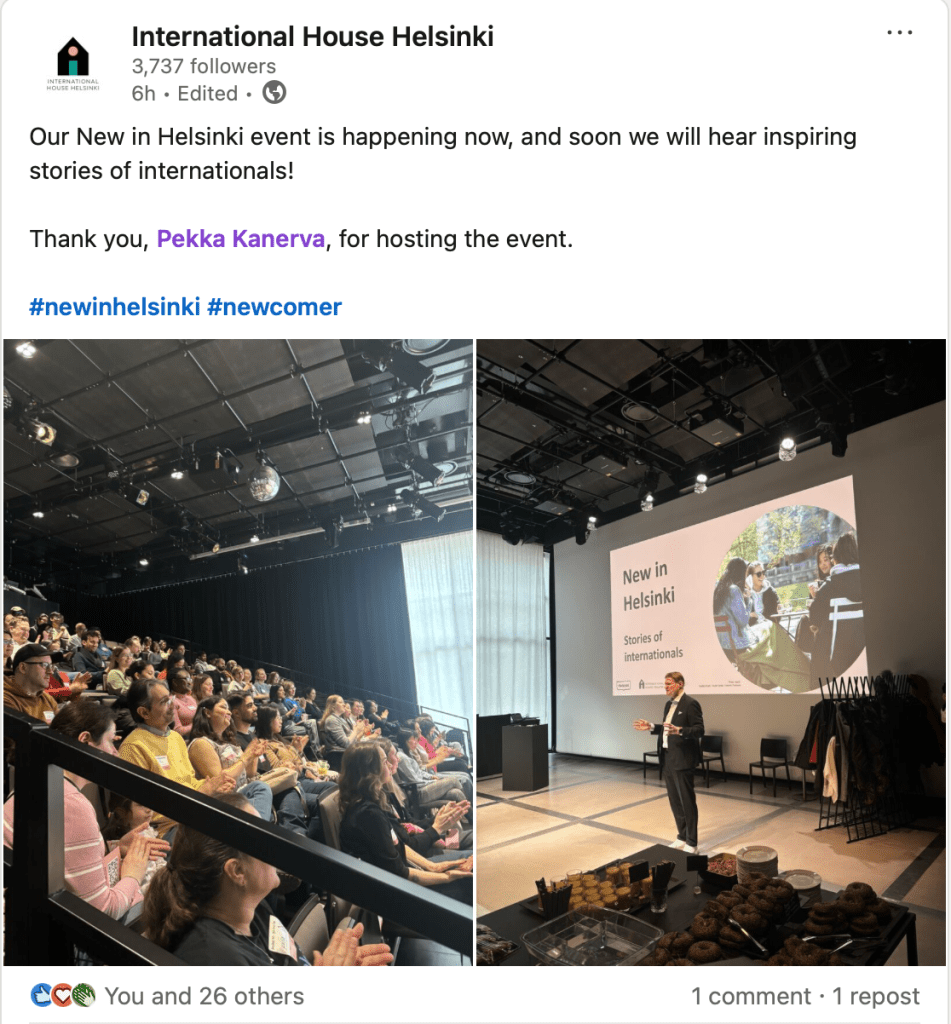
How do you host an event…and also act as a coach to the speakers?
Here’s a snapshot of my day yesterday, preparing to emcee an international event tomorrow night:
– Change of plans: one of the speakers had to cancel!
– Coaching the speakers preparing for their talks.
– Preparation meeting with the client, the organizers and the production company.
– Update my script and continue rehearsing.
– Visit dentist
Yes, the first thing I saw in the morning was a message from one of our speakers: they had to cancel their participation in the event. Contrary to what many think, this is business as usual and happens all the time. We discussed a plan B (and C, D, E and F ) with the organizers and went ahead with a solution. The content of the event continues to be solid.
Acting as both the emcee of the event and a coach to the speakers.
This is slightly more complex than what it sounds.
Coaching public speakers is fun and rewarding, and there are actually many benefits when the host of the event is also the trainer to the speakers and panelists.
First of all, you get to know the speakers and the content they will deliver in advance. This makes it so much easier for you to interact with the speakers while on stage.
You’re also able to give more insightful comments on the content of their talks to the audience.
In addition, you’re able to coordinate the roles and content of the speakers during the Q&A or a panel discussion.
This makes your panel discussion stand out from 99% of panel discussions, by not being boring.
Finally, you will know that the speakers will deliver fantastic talks as you yourself have helped them prepare and rehearse. …Well, of course only if you’ve done a good job
By the way, there’s an interesting dichotomy here: many emcees don’t exactly shine as excellent listeners, and a speech coach needs to have advanced active listening skills. Many people are both good listeners and good speakers, but not everyone.
Visit dentist: a piece of my tooth broke! I don’t want to have a toothache while on stage! Fixed!
Other activities yesterday included a final planning meeting with the organizers and again, updating and rehearsing my script.
The photo depicts a speaker coach at the end of a rehearsal session with one of the speakers. I guess I’ve gotta shave and get a haircut before climbing on stage.
How do you prepare to be the master of ceremonies and lead a panel discussion at an event?
Well, in many ways. Here’s a snapshot from today, preparing for a gig on Wednesday:
Today, as every day until the event, I’ve been rehearsing my script.
For instance I’ve been thinking on how to make sure my choice of words will work for both native English speakers as well as for an audience coming from all continents except where the penguins live.
How will I handle audience questions to the American panelists if the discussion turns to American politics?
Should I wear orange, my go-to color that energizes both the audience and me, or something else?
One thing I know for sure: the song I want played when I walk onto the stage.
It’s my feel-good song since already for weeks now. Has to do with sauna.
Hosting events is fun and rewarding. I consider to have succeeded when I get the speakers to shine and the audience to be satisfied with the event.
Organizations are losing significant profits and their employees’ well-being is being compromised due to delayed and ineffective reactions to interpersonal conflicts.
One of the key rules in conflict resolution is to take action promptly upon identifying a conflict.
However, in reality, necessary difficult conversations often get postponed for weeks, months, or even years.
Yet, the biggest damage caused by a conflict is usually not caused by the issue that started it.
The most significant damage tends to take place between the moment the conflict originally began and the time the conflict was resolved. A small issue often grows to a big and ugly monster.
Very often, delaying the resolution of interpersonal conflict causes significant financial loss to the employer, as well as takes a toll on the health of those involved.
My mission is to help people become better communicators and to improve their interaction skills.
There are conflicts between people in all organizations. Toastmasters, an organization dedicated to helping people excel at public speaking, is a rare exception in having had the wisdom to of set up a conflict resolution function within its organization.
What do I mean by a conflict?
Conflicts are usually the quite mundane issues and arguments between people at a business, at a hobby or at home.
Most often it’s about someone having insulted another person, either on purpose or unknowingly.
Then, over the weeks, months and surprisingly often even years, the issue grows. People avoid talking to each other and instead talk negatively about others behind their back.
A huge amount of people’s energy is wasted in a negative spiral, instead of productive work.
Stress levels rise.
All this prevents organizations from achieving their full potential. It makes it harder for people and organizations to reach both their short- and long-term goals, whether they are about sales, profit or qualitative goals.
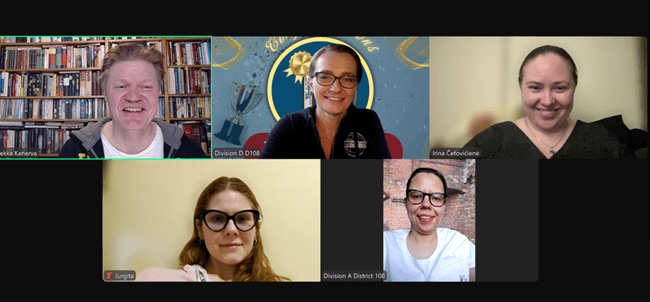
For the past twelve months, I’ve had the privilege of running a conflict resolution team at Toastmasters. While the organization is global, my district consists of seven countries and about 2,000 members from the Baltics, Finland, Kazakhstan, Poland and Russia.
For the past year, the team led by me has been able to help people resolve a number of issues between people. As a result, this district has been more effective and better reached its goals, as well as supported the well-being of the members.
Recently, something extraordinary happened at the final meeting of the outgoing conflict resolution team.
I asked everyone to tell what has been good about our activities, as well as what could be done better next year. To my surprise, everyone mentioned something I didn’t expect.
Everyone said that in addition to having been able to help other people, they had grown personally.
Helping other people resolve their conflicts had made all group members more aware of their own behavior in conflict situations. As a result, they had begun to think about new ways to navigate through difficult conversations of their own.
I realized that I had had exactly the same experience. For example, I now react more calmly in a difficult situation than before.
I’m also more aware of the different ways of behavior I can choose from when a potential conflict arises.
Increasingly, I become conscious of the various options on the spot, instead of as an afterthought: “I wish I had said this and that” or “I wish I had not said this and that”.
It turns out that helping other people resolve difficult situations was a twelve-month free of charge self-development course.
So, huge thanks to Magdalena Suraj, Irina Cetoviciene, Daniel Zakharov, Jurgita Keblyte, Justyna Lipska and Ernestas Ryselis for serving in the team.
Special thanks Kamil Chmiel for coming up with the idea in the first place, and to Piotr Chimko and Olga Turek-Wozniak for encouraging me to take on the challenge.
Does your organization have a conflict resolution adviser?



 Yes, the first thing I saw in the morning was a message from one of our speakers: they had to cancel their participation in the event. Contrary to what many think, this is business as usual and happens all the time. We discussed a plan B (and C, D, E and F
  ) with the organizers and went ahead with a solution. The content of the event continues to be solid.
 Acting as both the emcee of the event and a coach to the speakers.

 Visit dentist: a piece of my tooth broke! I don’t want to have a toothache while on stage! Fixed!

 Would you like to become a better communicator?