What do you do when you realize you’re about to have a business meeting with a client, and at the reception desk you hear the person next to you is going to meet the same person at the same time? 😃
You network. 😃
I said ”Excuse me, I get the impression we’re about to meet the same person at the same time”.
We introduce ourselves to one another and assume there must be some kind of a misunderstanding.
While waiting for the meeting to begin, the Swedish guy and I have a conversation and realize we’re not competitors to each other. We exchange contact details and agree on a meeting about potentially working together at some point.
This happened yesterday.
I’ve seen a lot of interesting situations in meetings, but this was a first.
Sometimes buyers like to put people in awkward situations, but not that buyer I was about to meet, he is not that kind of a guy. Yesterday was about a misunderstanding.
What’s the strangest thing you’ve encountered in a meeting? 💥
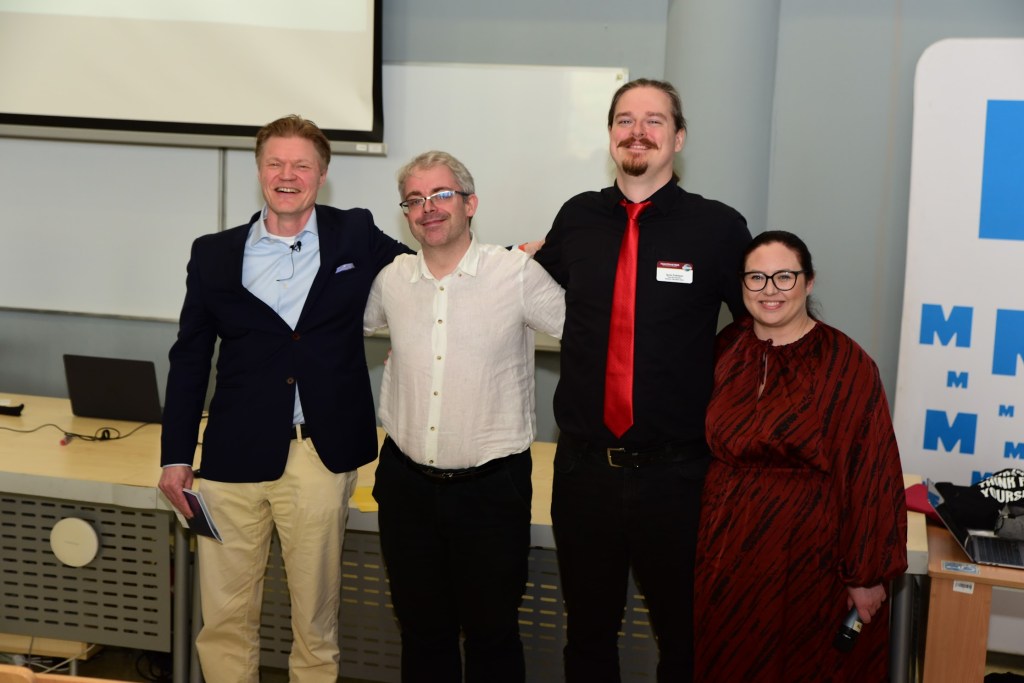
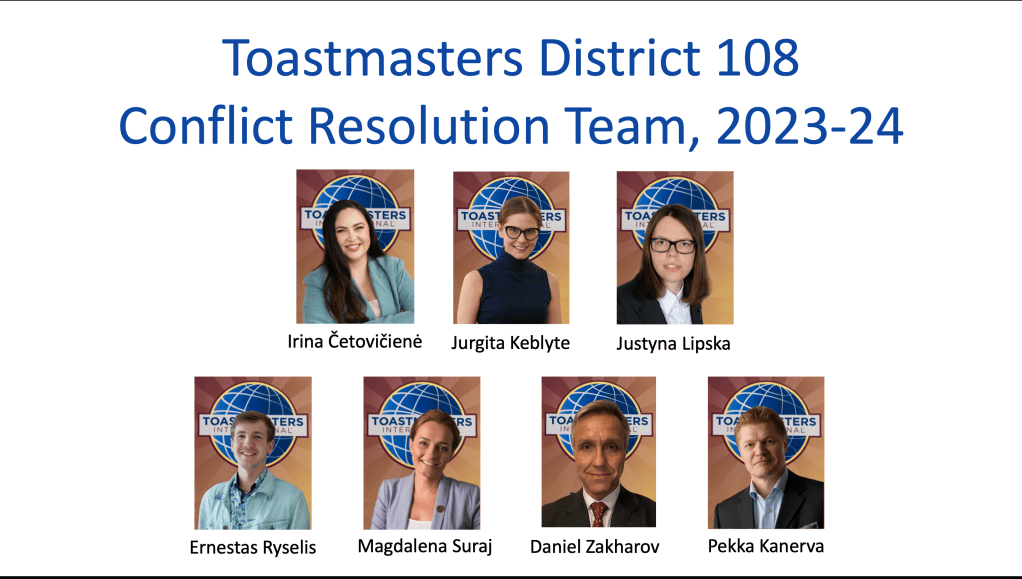
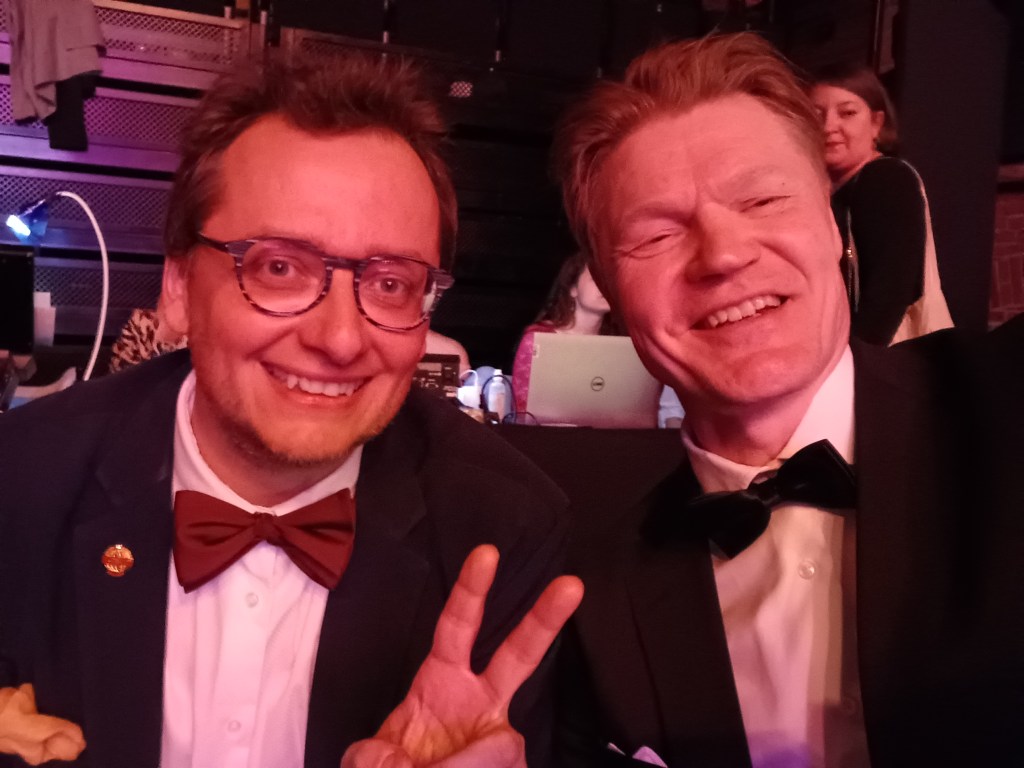
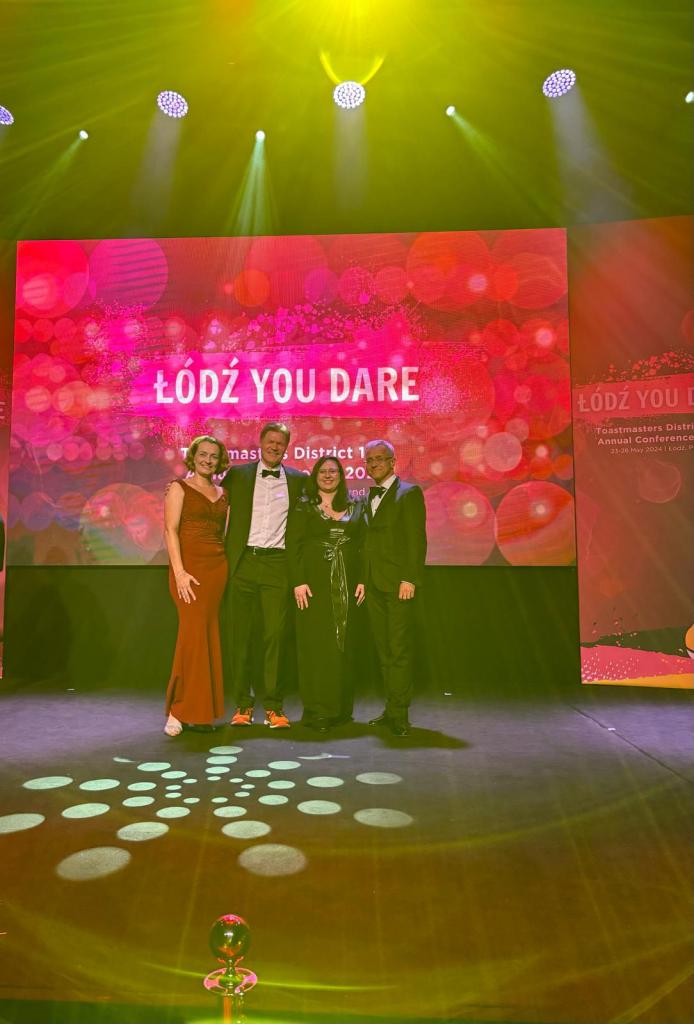
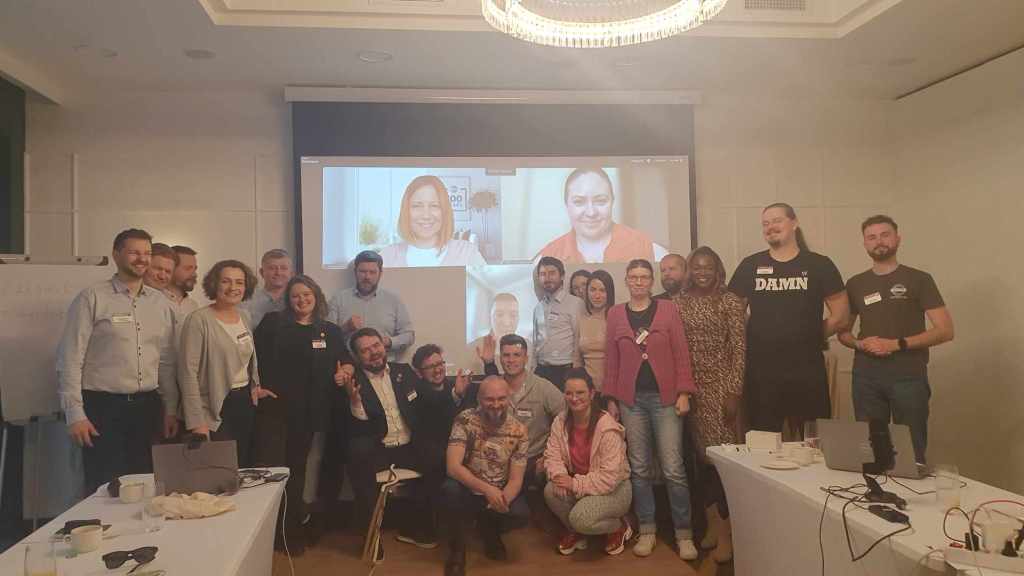
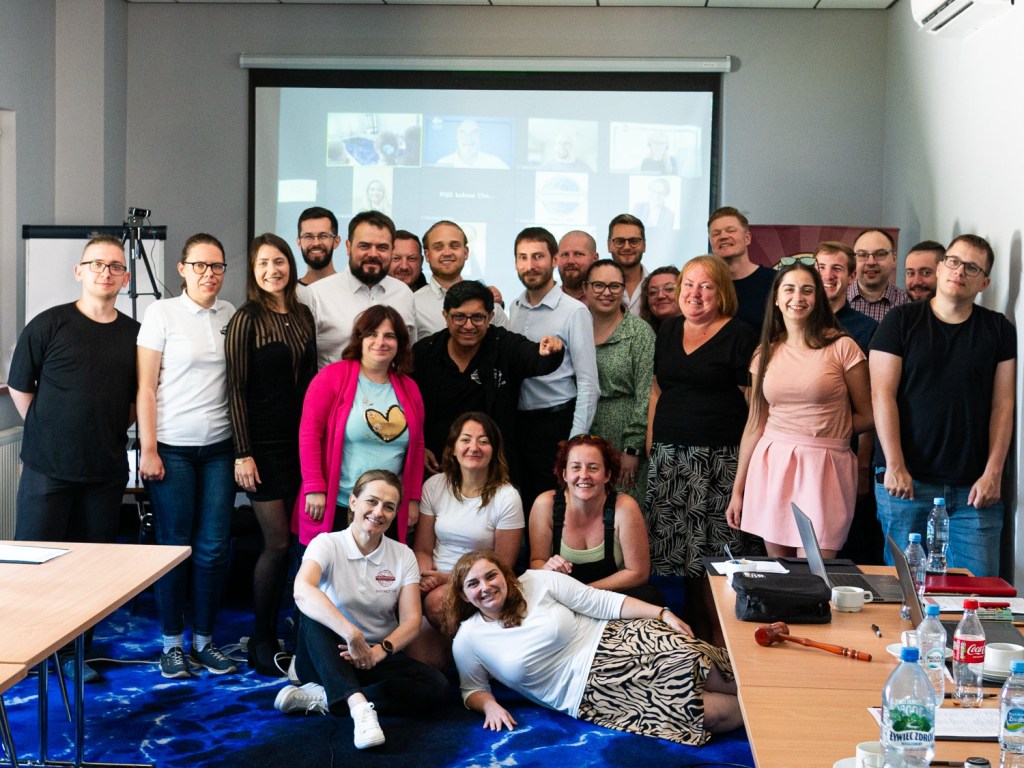
Four of the team members conducting a workshop at the Toastmasters district conference in Torun, Poland, in May. Photo credit Wiktor Guryn.Our team for this past year.Our team for the year 2023-2024.At the annual District Conference in Toruń in May 2025.At the annual District Conference in Łódź in May 2024.Four of our team members at the District 108 annual conference in Łódź in May 2024.Some of the District 108 Core Team members and Area Directors in the year 2024-2025.Some of the District 108 Core Team members and Area Directors in the year 2023-2024.
Getting big things done takes a village. At Toastmasters International, my public speaking organization, the year ends at the end of June. So, I thought it’s time to say thank you to a couple of good folks.
Today I have served two years as the Conflict Resolution Adviser and had the privilege to lead the Conflict Resolution Team for our Toastmasters International, District 108, comprising seven countries: Poland, Estonia, Latvia, Lithuania, Finland, Russia and Kazakhstan.
It’s been quit an incredible journey and it wouldn’t have happened without the following people.
Olga Turek-Woźniak was the first Conflict Resolution Manager at our District a few years back. She got things started, encouraged me to take this role and gave me good advice in the beginning.
Kamil Chmiel, as the District Director, asked me two years ago to accept the role of the Conflict Resolution Adviser in our organization. First I hesitated but I’m glad I said yes.
Łukasz Chomicz, as the District Director for the past one year, asked me to serve another year.
Kamil and Łukasz have been great partners in making things happen.
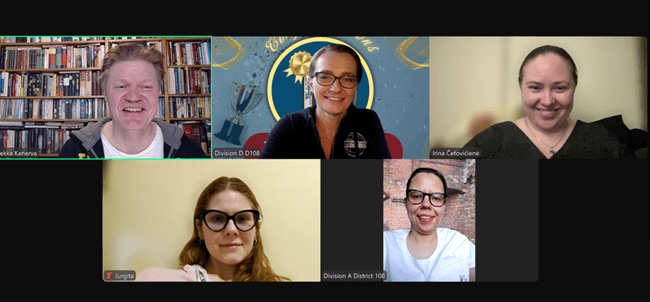
The fantastic fantastic Irina Četovičienė, Jurgita Keblyte, Justyna Lipska, Ernestas Ryselis, Magdalena Suraj and Daniel Zakharov served on my team in the 2023-2024 term.
The equally fantastic Roberto Bolomey, Irina Četovičienė, Paweł Lachowicz, Michał Moroz, Ignas Prakapas, Vadim Vasilyev and Karolina Wróbel served on my team for the 2024-2025 term.
With these teams, we have coached our Toastmasters members through tough spots, helped them manage and resolve conflicts, organized trainings and workshops and created a Conflict Resolution Guidebook for all our members to use.
Within these teams we have also supported, coached and educated one another.
One of my most memorable moments of these two years was when my team members said how much they had benefited themselves from learning more about conflict resolution.
We have not only helped other people but as a by-product, we have grown as human beings ourselves.
In addition to the team itself, my Polish brother, former Region 10 Advisor Piotr Chimko was always there, ready to converse about things big and small.
Working with Margherita Brodbeck Roth was one of my most rewarding and educational experiences in the past two years. Thank you.
Last but not least, there’s the Core Team of District 108, including our Area Directors: it’s been a tremendous honor and pleasure to work with each one of you. Oftentimes it’s also been a lot of fun. It would be too many names and too many fond memories to list here. You know who you are.
If I forget to mention someone, it’s because of my occasionally bad memory.
As to my biggest achievement in these two years, I think it is that I had the wisdom and luck to be able to recruit such talented and motivated members to my team. Together we have created a strong foundation for the future.
The future looks very good also because Michał Moroz will lead our conflict resolution function for the next year.
A new Toastmasters year begins tomorrow, so what next? Time will tell. For now, I’ll just cherish all the learning and all the friendships.
A heartfelt thank you to everyone who’s been part of this journey. As Ignas Prakapas said at our last team meeting, this is not a goodbye but a see you later!
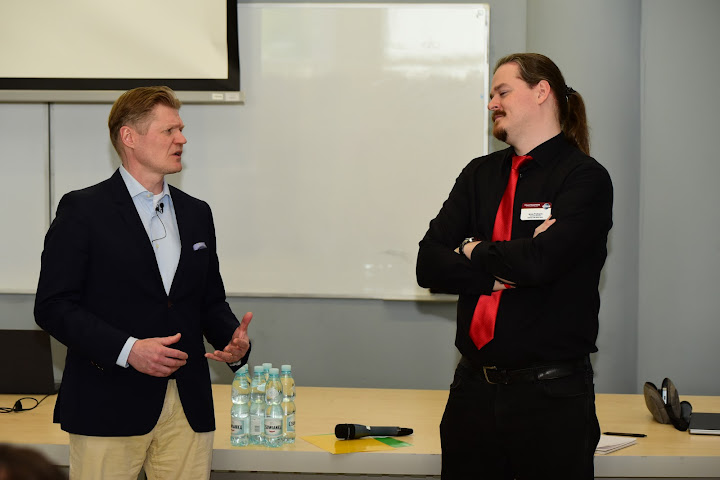
Ignas and Pekka performing a role play on corrective feedback. Photo credit: Wiktor Guryn.
Did you know that dealing with disagreements, conducting difficult conversations and resolving conflicts are skills that can be learned?
They are skills that can be learned just like public speaking, sales or leadership skills.
Your ability to respond to disagreements and conflicts as well as to conduct difficult conversations affects your happiness and success at work and in your private life, every day.
I have today served two years as the Conflict Resolution Adviser for a global public speaking organization that I’m a member of.
The organization is called Toastmasters International, and I’ve had the privilege to lead the Conflict Resolution Team at the organization’s fantastic District 108 comprising seven countries: Poland, Estonia, Latvia, Lithuania, Finland, Russia and Kazakhstan.
It’s been a pretty incredible journey and and these are some of the lessons I have learned:
A conversation, a disagreement or a conflict is primarily about emotions. Facts also count, but much less.
People have a deep need to feel heard, to feel acknowledged, to feel seen. They need to have their emotions acknowledged. Until that has happened, they are not prepared to listen to your point of view. That’s the key to conducting difficult conversations and resolving conflicts.
We usually don’t like to take the initiative to address conflicts because we are afraid that speaking out may put us in trouble. We are afraid of damaging a relationship, our status in our community, or our position at the workplace.
Yet, when we don’t speak out about our frustration, we tend to act it out. The other party is usually aware that something is wrong even if we don’t take the initiative to resolve the conflict.
The longer a conflict is allowed to simmer, the more difficult it becomes to solve. I have seen many conflicts that have been going on for years before someone speaks out.
Most conflicts start small and are about relatively small things. Often they are about nothing more than well-meaning people misunderstanding each other. Then they easily grow when people start expecting the worst from each other.
I’ve seen people take disagreements to court, even conflicts about seemingly small things, because feelings have been hurt. The sad thing is that a court of law is not a place to get your emotions acknowledged. From a court you don’t get justice, you get a verdict.
The good news, again, is that conflict resolution skills can be learned by anyone. It takes time and dedication, but it’s well worth it, and I believe it’s an investment that we all should make.
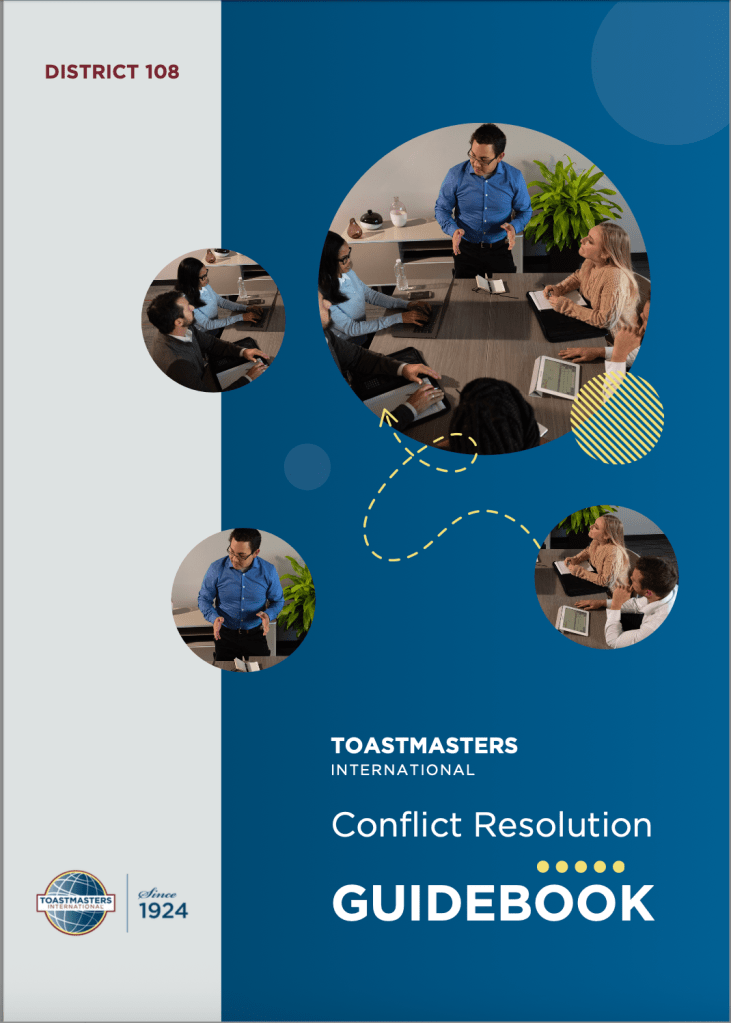
The guidebook is free of charge for anyone and I don’t even ask you to give your email address or any other information about yourself in exchange.
The only thing I ask from you is to read it, apply what you have learned and share it with anyone you think might benefit from it.
I believe this guidebook may be useful also for Toastmasters in other parts of the world, as well as basically any citizen of the planet.
This guidebook is brought to you by the Conflict Resolution Team of Toastmasters International, District 108: Roberto Bolomey, Irina Četovičienė, Paweł Lachowicz, Michał Moroz, Ignas Prakapas, Vadim Vasilyev, Karolina Wróbel and yours truly.
Proudly presenting the brand-new Conflict Resolution Guidebook published by our team. Photo credit: Wiktor Guryn.
Organizations are losing significant profits and their employees’ well-being is being compromised due to delayed and ineffective reactions to interpersonal conflicts.
One of the key rules in conflict resolution is to take action promptly upon identifying a conflict.
However, in reality, necessary difficult conversations often get postponed for weeks, months, or even years.
Yet, the biggest damage caused by a conflict is usually not caused by the issue that started it.
The most significant damage tends to take place between the moment the conflict originally began and the time the conflict was resolved. A small issue often grows to a big and ugly monster.
Very often, delaying the resolution of interpersonal conflict causes significant financial loss to the employer, as well as takes a toll on the health of those involved.
My mission is to help people become better communicators and to improve their interaction skills.
There are conflicts between people in all organizations. Toastmasters, an organization dedicated to helping people excel at public speaking, is a rare exception in having had the wisdom to of set up a conflict resolution function within its organization.
What do I mean by a conflict?
Conflicts are usually the quite mundane issues and arguments between people at a business, at a hobby or at home.
Most often it’s about someone having insulted another person, either on purpose or unknowingly.
Then, over the weeks, months and surprisingly often even years, the issue grows. People avoid talking to each other and instead talk negatively about others behind their back.
A huge amount of people’s energy is wasted in a negative spiral, instead of productive work.
Stress levels rise.
All this prevents organizations from achieving their full potential. It makes it harder for people and organizations to reach both their short- and long-term goals, whether they are about sales, profit or qualitative goals.
For the past twelve months, I’ve had the privilege of running a conflict resolution team at Toastmasters. While the organization is global, my district consists of seven countries and about 2,000 members from the Baltics, Finland, Kazakhstan, Poland and Russia.
For the past year, the team led by me has been able to help people resolve a number of issues between people. As a result, this district has been more effective and better reached its goals, as well as supported the well-being of the members.
Recently, something extraordinary happened at the final meeting of the outgoing conflict resolution team.
I asked everyone to tell what has been good about our activities, as well as what could be done better next year. To my surprise, everyone mentioned something I didn’t expect.
Everyone said that in addition to having been able to help other people, they had grown personally.
Helping other people resolve their conflicts had made all group members more aware of their own behavior in conflict situations. As a result, they had begun to think about new ways to navigate through difficult conversations of their own.
I realized that I had had exactly the same experience. For example, I now react more calmly in a difficult situation than before.
I’m also more aware of the different ways of behavior I can choose from when a potential conflict arises.
Increasingly, I become conscious of the various options on the spot, instead of as an afterthought: “I wish I had said this and that” or “I wish I had not said this and that”.
It turns out that helping other people resolve difficult situations was a twelve-month free of charge self-development course.
So, huge thanks to Magdalena Suraj, Irina Cetoviciene, Daniel Zakharov, Jurgita Keblyte, Justyna Lipska and Ernestas Ryselis for serving in the team.
Special thanks Kamil Chmiel for coming up with the idea in the first place, and to Piotr Chimko and Olga Turek-Wozniak for encouraging me to take on the challenge.
Does your organization have a conflict resolution adviser?




 Would you like to become a better communicator?